When architects and developers search for a material that can make a building look sharp, contemporary, and technically dependable at the same time, the conversation often comes down to one big challenge. They want strength, but they do not want excessive weight. They want aesthetics, but they do not want to sacrifice performance. And they want durability, but without locking themselves into bulky, restrictive materials.
That is exactly why rigid lightweight panels are becoming central to modern façade thinking.
At Aludecor, we see this shift very clearly through Nexcomb. Our aluminium honeycomb panels are engineered to deliver a rare balance of structural efficiency, design versatility, and long term reliability. Nexcomb is built around an in house honeycomb core manufacturing system, which gives us tighter control over precision, bonding consistency, and quality. That in itself is a major differentiator in the market.
More importantly, Nexcomb proves that rigid lightweight panels are not just a material trend. They are a practical answer to the way architecture is evolving. From bold facades and curved applications to transport infrastructure and large span interiors, these panels are opening up possibilities that conventional solid sheets and many standard cladding materials struggle to match. Nexcomb is available from 6 mm to 100 mm thicknesses, offers curved applications in a 300 mm to 2000 mm radius range, and is designed to combine low dead load with high rigidity.
So, if the goal is to create stylish yet high performing structures, rigid lightweight panels deserve serious attention.
What Makes Rigid Lightweight Panels Structurally Superior
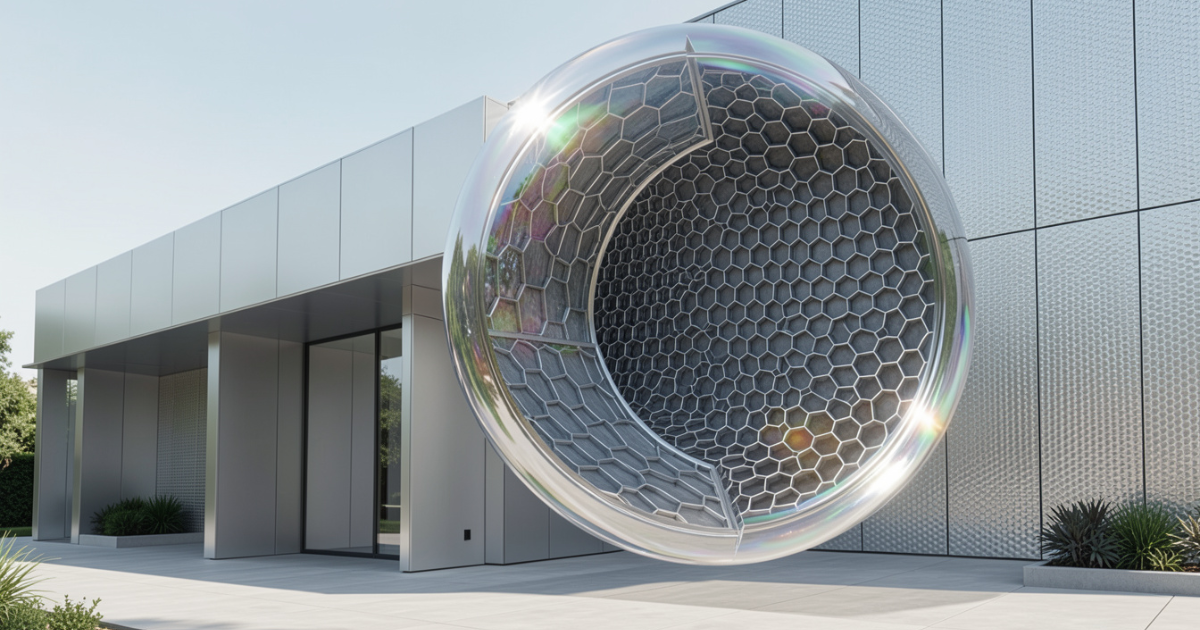
The structural advantage of rigid lightweight panels lies in geometry, not just material mass. That is the interesting part. Nexcomb uses a hexagonal aluminium honeycomb core that behaves like countless miniature I beams across the panel. This arrangement separates the face skins, supports shear transfer through the core, and significantly improves bending stiffness and torsional rigidity without making the panel excessively heavy. The brochure explains this I beam analogy clearly, and it is one of the most important reasons why honeycomb construction performs so well.
At Aludecor, we manufacture Nexcore in house using AA3003 H18 grade aluminium alloy. That core is then bonded to the aluminium skins to create a sandwich panel that is remarkably stable. Smaller cell sizes can further increase load bearing capacity, while custom cell options such as 3 mm, 4 mm, 6 mm, 10 mm, 14 mm, and 19 mm allow us to tune weight and strength according to project needs.
This is where high strength aluminium honeycomb panels begin to stand apart from conventional sheet based solutions. Solid metal sheets often rely on thickness alone to improve stiffness. That approach adds weight quickly. Honeycomb construction takes a different route. It distributes load intelligently while using less material. The result is a structure that remains stable under wind pressure and impact, but does not burden the building with unnecessary dead load. Nexcomb literature explicitly highlights its unrivalled strength to weight ratio and its ability to withstand demanding environments.
Let’s be honest, this is one of the biggest reasons architects and façade consultants are looking more seriously at high strength aluminium honeycomb panels. They can achieve structural confidence without creating downstream complications in substructure design, transport, and installation.
And this is why rigid lightweight panels are not simply “lighter panels.” They are engineered systems.
Also Read : The Role of Aluminium Honeycomb Panel Energy-Efficient Designs
Design Freedom with Rigid Lightweight Panels for Modern Shapes and Finishes
Performance matters, but architecture is also visual. A façade must communicate something. It must create identity, proportion, rhythm, and character. This is where rigid lightweight panels become very exciting from a design standpoint.
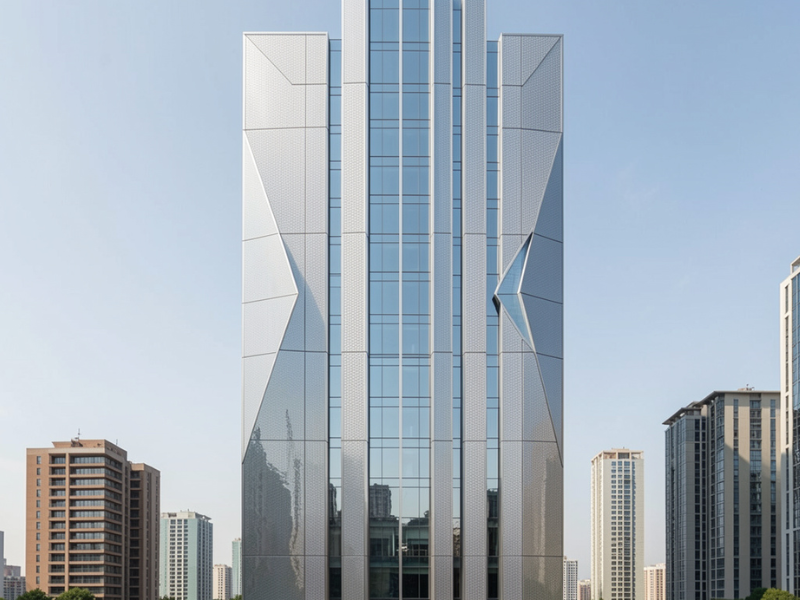
Nexcomb offers panel thickness flexibility from 6 mm to 100 mm and supports curved applications in radii from 300 mm to 2000 mm. That means we are not limited to flat, repetitive surfaces. We can help create curved columns, bullnoses, contemporary facades, transport interiors, and more expressive building skins.
And then there is finish flexibility. Nexcomb is available in aluminium, zinc, copper, and more, and the product system is positioned around unmatched innovative finishes from Aludecor’s coil coating strength. The product can also be adapted for varied visual treatments depending on application intent.
This is one area where durable building façade panels need to do more than survive weather. They need to unlock aesthetic ambition. A good panel should let the architect think freely, not defensively. Nexcomb 3D Louvers push this even further by showing how aluminium honeycomb technology can support parametric envelopes, geometric fins, layered façade expressions, and sunlight responsive design. The 3D louver brochure speaks directly about design flexibility, structural innovation, and visual identity.
So when we talk about rigid lightweight panels, we are also talking about creative freedom. Clean flat surfaces. Curved shapes. Parametric possibilities. Controlled light and shadow. Distinctive external identities.
That is why high strength aluminium honeycomb panels are not only an engineering story. They are also a design story.
Strength to Weight Advantage for Large Scale Projects
Large projects expose material weaknesses very quickly. A panel may look fine in a small sample, but once the area grows, every issue becomes more visible. Weight, handling difficulty, waviness, substructure demand, and installation inefficiencies all start adding up.
This is where rigid lightweight panels prove their value in the real world.
According to the Nexcomb comparison data, a 10 mm Nexcomb panel weighs about 5.2 kg per square metre, while a 6 mm Nexcomb panel weighs about 8.2 kg per square metre depending on construction details. The brochure also compares Nexcomb favourably against solid metal sheet, stone, HPL, and ACP across parameters such as rigidity, flatness, panel size, installation ease, support need, and team requirement. It repeatedly positions Nexcomb as the lightest or among the lightest options while maintaining high compressive strength and excellent flatness.
That lower weight changes many things. It reduces the dead load on the structure. It can reduce substructure requirements. It simplifies transportation and installation. It supports modular, ready to fix panels. And it becomes especially useful in high rise facades, ceilings, cleanrooms, mobility applications, bus floors, railway floors, escalator and lift floors, where weight and rigidity must coexist.
This is exactly why durable building façade panels for major projects increasingly need to be light without being flimsy. Not every lightweight product is structurally dependable. Not every strong product is easy to deploy at scale. Nexcomb sits in that sweet spot.
And yes, high strength aluminium honeycomb panels become particularly compelling on large format facades because their stiffness helps retain surface discipline over wider areas. That clean visual flatness matters a lot on commercial towers, airports, metro stations, and premium institutional buildings.
In short, rigid lightweight panels make scale more manageable.

Durability and Weather Resistance in Harsh Conditions with Rigid Lightweight Panels
A panel system only earns long term trust when it performs under real environmental stress. Heat. Moisture. corrosion. impact. UV exposure. Wind. These conditions separate genuinely dependable systems from products that merely look good in presentations.
Nexcomb is built for this tougher reality. The brochure specifically highlights advanced weather and corrosion resistance, impact resistance, heat resistance, and sound resistance. It also states that Nexcomb can meet A2 performance criteria under EN 13501 1 as A2 s1 d0, meaning negligible smoke and zero flaming droplets, which strengthens its case for demanding façade applications.
For the Nexcomb 3D Louvers system, the technical specifications mention PVDF and SDP coating systems, accelerated weathering performance as per ASTM G154, salt spray testing as per ASTM B117, humidity resistance as per ASTM D2247, and a working temperature range of minus 20°C to plus 80°C. That is exactly the kind of technical depth specifiers look for when choosing durable building façade panels.
We should also mention sustainability because it overlaps strongly with durability. Nexcomb panels are 100 percent recyclable, are designed with lower CO2 emissions than comparable solid aluminium sheets and ACP panels in the cited example, and support green building thinking through thermal insulation, acoustic insulation, and long service life. The brochure notes 30 percent recycled aluminium in the system and cites significantly lower embodied carbon values for a 12 mm Nexcomb panel when compared to a 3 mm solid aluminium sheet and a 4 mm ACP panel.
So when people ask whether rigid lightweight panels can also be long lasting, the answer is yes, provided the engineering is right. Nexcomb demonstrates that clearly.
That is also why durable building façade panels cannot be judged only by thickness or appearance. Internal construction, bonding quality, alloy selection, coating performance, and manufacturing precision matter just as much.
Conclusion
Stylish architecture today is not built on visual appeal alone. It is built on systems that can carry design intent without compromising performance. That is why rigid lightweight panels have become such an important material category for modern construction.
At Aludecor, we believe Nexcomb shows exactly what this category should deliver. It gives us structural efficiency through honeycomb geometry. It gives us design flexibility through curved forms, varied thicknesses, and advanced façade possibilities. It gives us performance advantages in large scale projects by reducing dead load and simplifying installation. And it gives us long term confidence through weather resistance, corrosion resistance, fire performance, and recyclability.
For architects, consultants, developers, and fabricators who need a material that looks refined yet works hard, rigid lightweight panels are no longer optional to explore. They are increasingly the smarter path forward.
And among them, Nexcomb stands out because it is not merely lightweight. It is engineered. It is precise. It is expressive. It is built for projects that demand both beauty and backbone.
FAQs
Why are honeycomb panels stronger than regular composite panels?
Honeycomb panels derive their strength from structure, not bulk. In Nexcomb, the hexagonal aluminium core behaves like multiple miniature I beams spread across the panel, helping transfer shear loads and maintain stiffness while keeping weight low. This sandwich construction separates the face skins and improves bending rigidity far more efficiently than simply adding material thickness. That is why we position Nexcomb among high strength aluminium honeycomb panels for demanding architectural use. It offers a much better strength to weight balance, excellent flatness, and better structural efficiency than many conventional panel types used in façade and interior applications.
Can aluminium honeycomb panels be used for large façade areas?
Yes, they are particularly well suited for large façade areas. Nexcomb is designed as one of our rigid lightweight panels for projects where panel weight, flatness, and substructure efficiency matter a lot. Because the system remains lightweight while retaining high rigidity, it helps reduce dead load on the building and supports faster, more manageable installation. Our brochures also position Nexcomb for facades, ceilings, cleanrooms, mobility applications, and large architectural surfaces. For designers and consultants looking at durable building façade panels for high rise or large scale commercial work, aluminium honeycomb construction makes a great deal of technical sense.
What finishes are available for these panels?
Nexcomb opens up broad finish possibilities because we build it on Aludecor’s material and coating expertise. The product range includes aluminium, zinc, copper, and more, along with access to a wide palette of finishes. In the 3D louver system too, we specify corrosion resistant aluminium skins with PVDF or FEVE coatings for harsh outdoor use. This means the panels are not just strong. They are also visually versatile, making them a strong option for designers who want rigid lightweight panels that can align with premium aesthetic briefs. When the project needs high strength aluminium honeycomb panels with expressive finishes, Nexcomb is built for that balance.
Are aluminium honeycomb panels suitable for harsh weather conditions?
Yes, that is one of their strongest advantages when properly engineered. Nexcomb is developed as one of our durable building façade panels with advanced weather and corrosion resistance. The 3D louver specifications also reference accelerated weathering tests, salt spray testing, humidity resistance, and a working temperature range from minus 20°C to plus 80°C. Those are not cosmetic claims. They point to actual performance criteria that matter in façade specification. So for projects exposed to heat, humidity, rain, or atmospheric pollutants, rigid lightweight panels like Nexcomb offer a dependable and technically credible solution.
What makes Nexcomb different from many other aluminium honeycomb panel options?
The biggest difference is control and precision. We manufacture Nexcore in house, and that gives us stronger control over cell structure, bonding quality, and consistency across the finished panel. Nexcomb is also supported by automated production processes, custom cell size options, wide thickness flexibility, and curved application capability. That combination matters a lot because high strength aluminium honeycomb panels are only as good as the engineering behind them. Add to that our finish innovation, weather resistant systems, and application versatility, and Nexcomb becomes much more than a commodity panel. It becomes a serious specification grade answer for architects and façade consultants.