


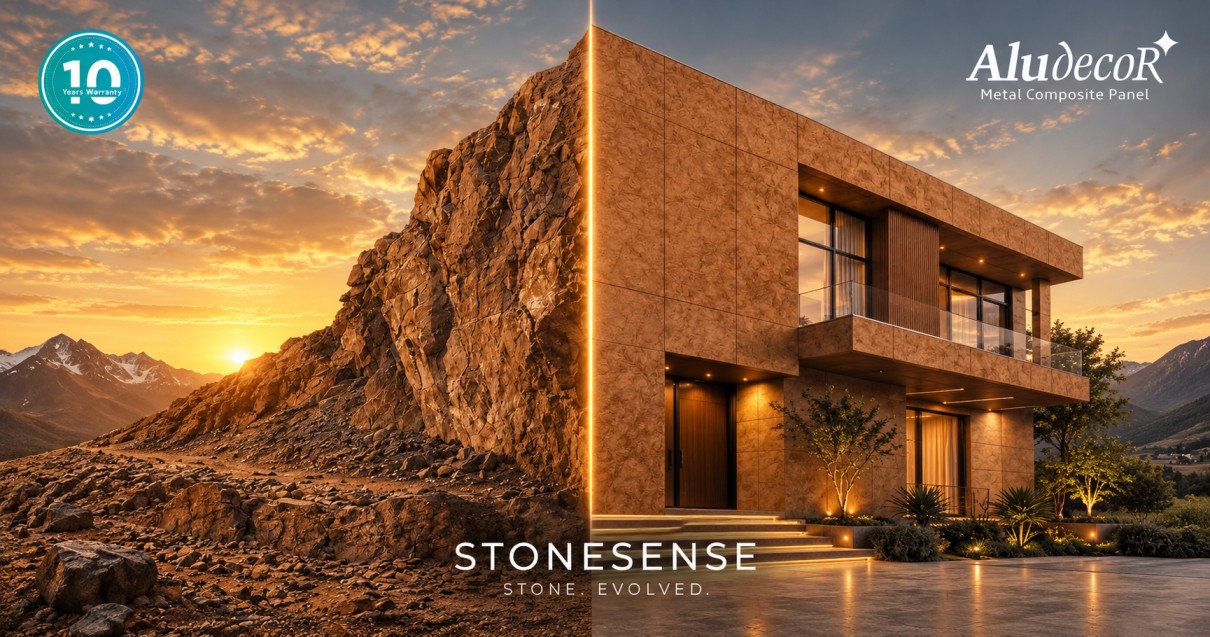
Stone has always had a special place in architecture. From grand entrances to contemporary homes, its natural textures, earthy colours and distinctive patterns bring a sense of permanence to a building. But as architectural design evolves, so do the materials used to achieve this look. Today, designers are looking beyond traditional stone to create facades that are visually striking, practical and suited to modern construction. This is where a natural stone finish ACP sheet offers an interesting design possibility. It brings stone-inspired aesthetics into a material system developed for contemporary facades.
At Aludecor, we believe that a surface should do more than look beautiful. It should also support the design intent and perform as expected over time. Our Stonesense collection reflects this approach, reimagining the character of stone through an architectural surface system engineered for modern facades
Why Does Natural Stone Continue to Inspire Modern Architecture?
There is something timeless about stone. Its texture, depth and natural variations give a building a distinct personality. A dark, rugged finish can make a facade look bold, while a lighter stone-inspired surface can create a calm and understated appearance. Natural stone also connects architecture with its surroundings. Its earthy character works beautifully with glass, metal, timber and greenery. This versatility explains why stone remains a popular design inspiration across residential, commercial and hospitality projects. However, achieving a particular stone aesthetic in a modern building involves more than selecting an attractive material. Architects and designers must consider the overall building design, installation requirements, detailing, maintenance and the performance expected from the chosen surface. This has encouraged interest in materials that reinterpret stone for contemporary applications.
A natural stone finish ACP sheet is one option for designers seeking a stone-inspired appearance through a different material format. The idea is not to suggest that every material can replace natural stone in every situation. Rather, it is about expanding the choices available to architects and helping them select a surface that suits the project’s visual and practical requirements.
What is a Natural Stone Finish ACP Sheet?
A natural stone finish ACP sheet is a composite panel with a surface finish inspired by the appearance and character of natural stone. Depending on the design, the finish can bring earthy tones, subtle textures and a contemporary stone aesthetic to a building. Unlike a block of natural stone, this is an engineered panel system. Its composition, thickness, surface finish and installation requirements differ from those of quarried stone. These differences matter when architects and project teams evaluate materials for a particular application.
At Aludecor, Stonesense takes this concept further. As described in our brochure, it is an architectural surface system inspired by the intelligence of stone and engineered for modern facades. The collection brings together the visual appeal of stone and a material approach designed around contemporary architectural requirements. It offers a way to explore stone-inspired surfaces without limiting the design to the appearance of a traditional stone slab.

How a Stone Finish ACP Sheet Opens Up Design Possibilities
The appeal of stone lies in its variety. Some stones have deep, dramatic textures. Others have delicate layers, soft grey tones or warm earthy shades. Modern architecture uses these differences to create everything from bold exterior statements to quiet, minimal spaces. A stone finish ACP sheet can help designers explore this range through coordinated surface choices. The finish can become a defining feature of a facade or complement other materials without competing for attention. At Aludecor, our Stonesense collection brings this variety together through three design directions.
Igneous Depths: Bold and Expressive
Inspired by the strength and intensity associated with igneous formations, this direction is suited to designs that call for a strong visual presence. Deeper tones can help define building volumes and create contrast with glass, timber or lighter surfaces. And sometimes, a facade does not need too many elements to make an impression. A carefully selected surface, supported by considered lighting and clean detailing, can do much of the work.
Sedimentary Calm: Subtle and Balanced
Not every building needs a dramatic exterior. Some designs call for softer colours, restrained textures and a sense of visual balance. Sedimentary Calm explores this quieter expression of stone. Its understated character can complement contemporary homes, offices and other spaces where the architecture relies on proportion, light and material harmony.
Mineral Warmth: Earthy and Welcoming
Warm, grounded tones can make a building feel more inviting. Mineral Warmth draws inspiration from the warmer side of natural stone, offering a direction for designs that need depth without an overly dramatic finish. Together, these three directions show how a Stone finish ACP sheet can contribute to different architectural moods rather than being restricted to one style.
Discover Aludecor Stonesense
At Aludecor, we developed Stonesense around the idea that stone-inspired design can be interpreted for the needs of modern architecture. The collection includes finishes such as Andes Stone, Etna Stone, Fuji Stone, Aegean Stone, Riviera Stone, Sahara Stone and Tuscany Stone, among others. Each has its own visual character, allowing designers to explore different tones and surface expressions.
The collection also focuses on performance by design. Our brochure highlights the following attributes:
- Flexibility in form: Designed to adapt to complex architectural designs.
- Precision in finish: Consistent texture and attention to detail.
- Fade resistance: Engineered to retain colour and character over time.
- Delamination resistance: Advanced bonding technology intended to support layer integrity.
- Durability: Developed for long-term performance in real-world conditions.
These are the performance attributes of the Stonesense series. Actual suitability depends on the selected product grade, the project conditions, correct fabrication and installation, and the maintenance requirements. A natural stone finish ACP sheet should always be evaluated against the needs of the intended application, rather than appearance alone. This is particularly important when selecting a material for an exposed exterior.
Where Can Stone Inspired Surfaces Be Used?
One of the strengths of a stone-inspired design is its ability to work across different parts of a building. The same visual language can be carried through the exterior and selected architectural features to create a more considered overall appearance.
Aludecor Stonesense is presented for applications including:
Building facades: Create a distinctive exterior with stone-inspired colours and textures.
Feature walls: Add visual depth to selected areas without making the entire space visually heavy.
Entrances and canopies: Establish a strong first impression through coordinated surface finishes.
Architectural details: Bring consistency to selected design elements and help connect different parts of the building.
A Stone finish ACP sheet can be considered for these applications when its specifications and installation system suit the project. For exterior use, the design team should also assess exposure, substrate, fixing details, local conditions and applicable safety requirements.
Is a natural stone finish ACP sheet a Practical Alternative to Natural Stone?
Natural stone and engineered composite surfaces are different materials. They have different compositions, installation methods and performance characteristics. Neither should automatically be considered the better choice for every building.
A natural stone finish ACP sheet may appeal to projects where the design calls for a stone-inspired appearance in a panel format. The choice should then be assessed against the project’s structural design, budget, installation approach, maintenance plan and required service conditions. Stonesense is designed around the visual character of stone and the needs of modern facades. Its stated features, including fade resistance, delamination resistance and consistent finish, are relevant considerations when evaluating the product. However, it would not be accurate to claim that it matches natural stone in every respect or that it will always cost less. Such comparisons depend on the materials selected, project design, installation and long-term maintenance.
Rethinking Stone for the Architecture of Tomorrow
Stone continues to inspire architecture because it brings texture, depth and a connection to nature. Modern materials give designers more ways to interpret that appeal and use it within contemporary building designs. With Stonesense, we at Aludecor bring together three distinct design directions, a varied collection of stone-inspired finishes and performance attributes developed for modern facades. The aim is to give architects and designers more room to explore how a surface can shape the character of a building. Because a thoughtful material choice is not only about how a building looks on day one. It is also about how the surface fits the design, the application and the expectations of the project over time. Explore Aludecor more at www.aludecor.com or contact us on 1800 102 0407 to learn more.
FAQs
1. What is a natural stone finish ACP sheet used for?
It is used to achieve a stone-inspired appearance on suitable architectural surfaces. Depending on the product and installation system, applications may include building facades, feature walls, entrances, canopies and architectural details. Always confirm that the selected grade is appropriate for the intended location.
2. How is a Stone finish ACP sheet different from natural stone?
Natural stone is quarried, while a composite panel is an engineered product with a different construction. They differ in composition, thickness, handling, installation and performance characteristics. A panel with a stone-inspired finish recreates a visual direction; it should not be assumed to have all the properties of natural stone.
3. Is Stonesense suitable for exterior facades?
Stonesense is presented by Aludecor as an architectural surface system engineered for modern facades. Its brochure also identifies feature walls, entrances and canopies, and architectural details as applications. Final suitability should be confirmed against the selected grade, project conditions, installation design and applicable requirements.
4. Does a natural stone finish ACP sheet require maintenance?
Maintenance depends on the product, its exposure and the surrounding environment. Aludecor’s general guidance recommends annual cleaning with a mild detergent and a soft cloth, followed by rinsing with clean water, while avoiding abrasive cleaners. Coastal and high pollution areas may require more frequent cleaning. Follow the product-specific maintenance guidance for the installed system.
5. How should architects choose the right stone-inspired finish?
Start with the building’s design intent. Consider the colour palette, surrounding materials, lighting, panel layout and the visual effect you want to create. Then review the product specifications, installation requirements and suitability for the intended application. For a facade, performance and safety considerations must be evaluated alongside appearance.


