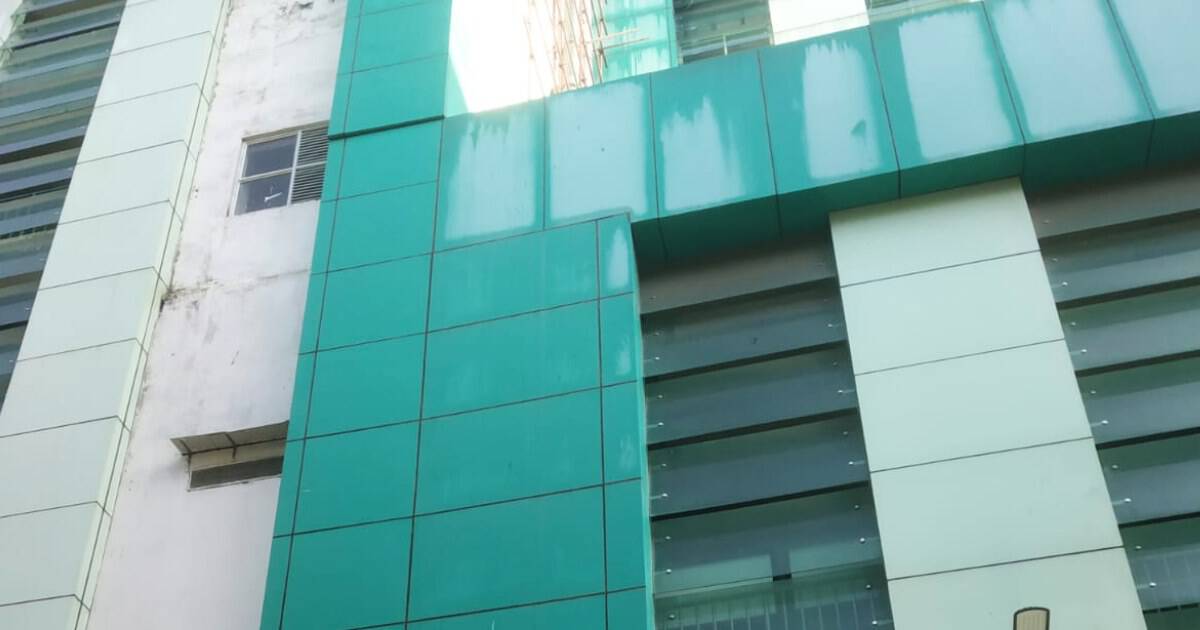
Indian facades face some of the toughest weathering conditions in the world – intense sun, high UV index, rising pollution, monsoon moisture, industrial particulates, and coastal salt-laden winds. Naturally, ACP fading has become one of the top concerns for builders, architects, facade consultants, and fabricators. Most fading problems trace back to inferior coating systems, weak UV resistance, and untested material quality.
At Aludecor, we believe long-lasting ACP facades are not created by claims alone. They are created through superior coating engineering, carefully selected alloys and resins, and authentic, long-term validation through scientific testing. If you are searching for Fade Resistant ACP, Weather-resistant ACP panels, or want to understand how to choose ACP that does not fade, the answer lies in choosing panels that are engineered, tested, and proven for real Indian conditions.
This is where we stand apart – with 205 in-house quality tests, NABL-accredited testing capabilities, and a strong foundation in coating and metal durability. Our goal is simple: to help architects, fabricators, builders, dealers, and homeowners choose ACP sheets that remain rich, vibrant, and dependable for years.
Below are the five most important ways to ensure your ACP facades remain long-lasting, fade-resistant, and visually consistent over time.
1. Choose ACP With Superior Coil-Coating Systems
When it comes to fading resistance, the coating is one of the most important factors deciding how an ACP facade will age. Most fading-related complaints across India originate from poor-quality paint chemistry, inconsistent coating thickness, low-purity pigments, or coating processes that are not controlled with enough discipline.
Why coating matters so much
Coil-coated ACPs rely on a meticulous multi-layer coating process. A high-performance coating system typically depends on:
- High-purity PVDF or FEVE resin systems
- UV-stable inorganic pigments
- Precise curing cycles
- Strict film thickness control
- Consistent surface pretreatment of aluminium coils
Inferior coatings may look attractive in the shade card or at installation, but they can break down quickly under India’s UV-heavy climate. In cities such as Jaipur, Ahmedabad, Delhi, Chennai, Mumbai, Kochi, and other high-exposure regions, weak coating systems often lead to chalking, dulling, gloss loss, and visible colour fading within a few years.
How to identify superior coating systems
Before choosing ACP sheets for a facade, professionals should look beyond the colour and ask deeper questions about coating quality. Look for:
- 70:30 KYNAR 500 / Hylar PVDF coatings where applicable
- FEVE systems for brighter and more expressive shades
- In-house coil coating instead of loosely controlled outsourced finishing
- Multi-stage pretreatment for aluminium coils
- Proof of UV and durability testing, not only brochure claims
How we approach coating performance at Aludecor
At Aludecor, we control the coating process with a strong focus on long-term outdoor durability. Our coating systems are backed by 205 in-house tests, including oven boiling, freezing tests, impact tests, drum peel tests, and accelerated weathering tests.
We also work with a dedicated engineering approach for resin-pigment optimisation, process discipline, and batch-wise consistency control. This helps ensure that the coating chemistry remains stable even in challenging Indian climatic zones. For us, fade resistance is not treated as a marketing promise. It is treated as a performance outcome that must be tested before it is trusted.
2. Look for Proven UV Resistance Backed by QUV Testing
Even the best coating system needs validation. That is where QUV Accelerated Weathering Testing becomes important.
What is QUV testing?
QUV testing simulates outdoor weathering conditions in a controlled laboratory environment. It exposes ACP samples to:
- UV radiation
- Condensation cycles
- Moisture and humidity
- Heat and weather fluctuations
In simple terms, QUV testing compresses years of outdoor exposure into a shorter laboratory cycle. It helps predict how quickly an ACP panel may fade, chalk, lose gloss, or show surface degradation.
Why QUV matters for Indian facades
India receives high-intensity UV exposure across most regions for a significant part of the year. This makes QUV testing especially important for evaluating long-term colour stability. Without accelerated weathering validation, no one can confidently predict how a facade colour will perform after repeated exposure to sunlight, humidity, and pollution.
For architects and fabricators, QUV test data helps separate panels that merely look good at installation from panels that are built to stay visually consistent over time.
Ask for proof, not promises
Before specifying or installing ACP sheets, professionals should ask:
- Can you show QUV test results?
- What is the gloss retention performance?
- How does the coating behave after accelerated UV exposure?
- Has the panel been tested for Indian weathering conditions?
At Aludecor, rigorous QUV testing is part of our larger framework of 205 tests. Combined with our testing infrastructure and quality discipline, this helps us offer scientifically validated UV resistance – not just verbal assurance. Learn more about our comprehensive quality checks and architectural quality assurance by visiting the Aludecor 205 Tests page.
3. Ensure the ACP Alloy and Core Quality Are Built for Extreme Weather
While fading is primarily coating-driven, the aluminium alloy and core quality also influence long-term facade appearance. A facade is a complete system. If the aluminium skin, core, coating, and bond are not stable, the visual performance of the panel can weaken over time.
How alloy composition affects colour stability
A stable, corrosion-resistant aluminium alloy helps:
- Reduce under-film corrosion
- Prevent bubbling and blistering
- Maintain adhesion strength
- Improve panel integrity during thermal cycles
- Support the coating system over long-term exposure
In contrast, low-quality alloys may corrode faster. This can lead to premature coating degradation, patchy fading, or visible surface irregularities.
India-specific weathering challenges
India’s climatic conditions place tremendous stress on ACP sheets. Coastal regions expose panels to salt spray and corrosion. Industrial zones add acidic pollutants and chemical deposits. North India brings extreme summer and winter temperature differences. Urban centres expose facades to dust, soot, heat, and strong sunlight throughout the year.
Because of these conditions, weather-resistant ACP panels must be tested not only for appearance but also for corrosion resistance, bond integrity, and structural stability.
Key durability tests to look for
A reliable ACP brand should validate panels through multiple durability tests, such as:
- Salt spray tests for corrosion resistance
- Freezing tests for performance under low-temperature stress
- Humidity and boiling tests to evaluate delamination risk
- Drum peel tests for bonding strength
- Accelerated ageing tests for long-term material behaviour
At Aludecor, every batch is supported by controlled alloy selection, stringent adhesion and corrosion tests, and simulated weather cycles. This helps ensure that our facades retain their aesthetic integrity without developing avoidable fade-related weaknesses.
Read also: The Science Behind Long-Term Colour Stability in ACP Sheets
4. Verify the Brand’s Long-Term Certification and Testing Infrastructure
Most brands can make claims. Fewer brands can prove those claims repeatedly. For long-lasting ACP facades, ongoing testing infrastructure matters as much as product design.
Why NABL-accredited testing matters
NABL accreditation reflects testing discipline, calibration control, process traceability, and reliable reporting. In the building materials industry, this matters because test results influence safety, durability, specification decisions, and long-term project confidence.
When testing is backed by credible systems, professionals get data – not guesswork.
Why in-house testing matters
Outsourced testing may provide a snapshot. But facade performance depends on repeated consistency across batches and processes. Fading does not happen only because of one bad panel. It can happen because of:
- Process inconsistency
- Poorly controlled paint curing
- Variation in pigment quality
- Low-grade resin substitutions
- Inadequate surface preparation
In-house testing allows real-time monitoring, batch-wise consistency checks, long-term R&D, and continuous material improvement.
Why our 205 tests make a difference
At Aludecor, our 205 tests cover multiple aspects of product performance, including fade resistance, corrosion resistance, bonding strength, durability, fire behaviour, and long-term weathering. For fade-resistance and durability, this includes tests such as:
- QUV tests
- Salt spray tests
- Freezing tests
- Oven boiling tests
- Drum peel tests
- Humidity cycle tests
- Accelerated ageing tests
Together, these tests help us validate performance before our panels reach the project site. This is why we believe trust should be tested, not merely claimed.
5. Proper Installation and Maintenance Extend Colour Life
Even the best ACP panels can lose visual performance earlier than expected if they are mishandled during fabrication, installation, or maintenance. Material quality matters, but site discipline matters too.
Installation guidelines for maximum fade resistance
Fabricators and contractors should:
- Avoid alkaline cleaners that can damage coatings
- Handle panels with protective gloves where required
- Prevent deep scratches during cutting, bending, and routing
- Use compatible sealants and avoid low-grade silicones that may stain
- Maintain consistent panel direction by aligning arrows properly
- Avoid unnecessary exposure of protective film under direct sunlight for long periods
Incorrect handling can damage the coating surface, reduce UV resistance, or create uneven ageing patterns.
Basic maintenance advice
To preserve facade appearance, we recommend simple and periodic care:
- Wash facades once or twice a year with mild, neutral cleaners
- Remove bird droppings, stagnant dirt, and hard water stains quickly
- Avoid abrasive scrubbing tools
- Avoid high-pressure industrial cleaning unless approved by experts
- Inspect joints, sealants, and exposed edges annually
Proper installation and simple maintenance help extend the colour life of fade-resistant ACP facades and protect the original design intent. For expert guidance on structural safety, proper installation, and maintaining aesthetic integrity, avail our Design Assist service.
Conclusion: Trust What Is Tested, Not What Is Claimed
A long-lasting ACP facade depends on superior coating engineering, authentic QUV-backed UV resistance, strong alloy and core systems, scientific testing, and proper installation practices.
At Aludecor, we have built our quality philosophy around proof. With 205 in-house tests, decades of R&D, NABL-accredited testing capabilities, and deep expertise in coating and metal durability, we continue to strengthen our position as India’s most tested and trusted ACP brand.
For us, fade resistance is not only about colour. It is about protecting the identity of a building, the credibility of the specifier, the workmanship of the fabricator, and the confidence of the builder. If a facade is expected to stand tall for years, its performance must be tested before it is trusted. Bring your architectural vision to life with vibrant colors built to withstand the elements, Download our Product Brochure to explore the full fade-resistant ACP range.
📞 Call Aludecor’s toll-free support at 1800-102-0407 (India only)
🌐 For more details and expert advice visit https://www.aludecor.com/enquiry
Most Frequently Asked Questions to us
1. Why do ACP facades fade in India?
ACP facades fade in India primarily due to a combination of high UV radiation, air pollution, heat cycles, humidity, and inadequate coating quality. India experiences intense sunlight for most of the year, which can break down low-grade paint resins and unstable pigments over time. In urban and industrial regions, pollution particles accelerate chemical degradation, while coastal areas add salt-laden air to the stress.
Fading becomes more severe when ACP panels use inferior coating systems, diluted resins, organic pigments, or inconsistent curing. Another major reason is the absence of proper accelerated weathering tests, which means panels are never validated for long-term exposure before installation. Without scientific testing such as QUV, fading is not prevented – it is merely delayed.
2. What is the best way to choose fade-resistant ACP?
The most reliable way to choose fade-resistant ACP panels is to evaluate the coating system and its tested performance, not just surface appearance or brand claims. High-quality ACPs use high-purity PVDF or FEVE resin systems, combined with UV-stable pigments that resist colour breakdown under sunlight.
Equally important is proof of performance through testing. Look for ACPs that have undergone QUV accelerated weathering tests, corrosion tests, and long-term durability simulations. Panels manufactured under in-house controlled coating processes with rigorous quality checks offer better consistency and reliability. In short, fade resistance should be verified through data, not assumed from brochures or shade cards.
3. Does QUV testing really predict outdoor fading?
Yes, QUV testing is one of the most reliable methods for predicting how ACP coatings will behave outdoors over time. QUV accelerated weathering tests simulate sunlight, UV radiation, heat, moisture, and condensation cycles that ACP facades experience in real environments.
By compressing years of outdoor exposure into a shorter testing cycle, QUV testing helps measure gloss retention, colour stability, chalking resistance, and surface degradation. While no lab test can replicate nature perfectly, QUV provides a scientifically validated benchmark to compare coatings and identify panels likely to fade prematurely. ACPs that perform well in QUV testing generally show better long-term colour retention on actual buildings.
4. How long does a good ACP facade last without fading?
A well-engineered ACP facade with high-quality PVDF or FEVE coatings, UV-stable pigments, and validated durability tests can retain its colour and finish for 10 to 15 years or more under Indian conditions. In many cases, properly tested panels continue to perform beyond this period with minimal visual degradation.
The actual lifespan depends on factors such as geographic location, pollution levels, orientation of the facade, coating type, maintenance practices, and installation quality. ACPs that undergo accelerated weathering tests and corrosion resistance testing age more predictably and uniformly, whereas untested or low-grade panels may begin fading within just a few years.
5. Does installation affect ACP fading?
Yes, installation practices play a significant role in preserving the colour and finish of ACP facades. Even the best coatings can degrade prematurely if panels are mishandled during fabrication or installed incorrectly.
Using abrasive tools, harsh or alkaline cleaners, incompatible sealants, or excessive mechanical force can damage the coating surface and reduce UV resistance. Leaving protective films exposed to sunlight for too long can also cause staining or uneven ageing. Proper installation techniques, combined with simple annual cleaning using mild, neutral cleaners, help maintain the original appearance and extend the colour life of ACP facades.