


As façades become more complex and buildings grow taller, aluminium composite panels (ACP) are no longer treated as surface finishes alone. They are integral to fire safety, structural behaviour, regulatory compliance, and long-term building performance. In this context, testing standards are not procedural formalities; they are the foundation of responsible specification.
Among the various benchmarks used to validate ACP performance, NABL certification has emerged as one of the most critical yet frequently misunderstood indicators of test credibility. While many products in the market claim compliance through test reports, the presence, or absence – of NABL accreditation fundamentally changes how those reports should be interpreted.
Understanding what NABL certification actually represents, and why it matters specifically in ACP testing, is essential for architects, builders, and public authorities tasked with making risk-sensitive material decisions.
What Is NABL Certification?
NABL (National Accreditation Board for Testing and Calibration Laboratories) is an autonomous body under the Quality Council of India (QCI). It accredits laboratories based on ISO/IEC 17025, the global standard for laboratory competence.
When ACP tests are conducted in NABL certified testing labs for ACP, it ensures that:
- Testing equipment is calibrated and validated
- Test methods follow approved national or international standards
- Personnel are technically qualified and audited
- Results are repeatable, traceable, and legally defensible
In simple terms, NABL certification confirms that the testing process itself is trustworthy, not just the test result.
Without NABL accreditation, test reports may lack credibility in government tenders, audits, insurance claims, and legal disputes.
Why NABL Certification Is Crucial for ACP Panels
ACP panels play a critical role in building safety and performance. They form the external skin of facades, cover large surface areas, and are exposed continuously to fire risk, wind load, UV radiation, pollution, and moisture.
This is why ACP testing certification must be conducted under NABL oversight.
Key reasons NABL certification matters:
- Eliminates selective testing
non-accredited labs may test only favourable samples. NABL requires controlled sampling and documentation. - Prevents inconsistent results
Repeatability is mandatory under NABL, ensuring batch-to-batch consistency. - Supports regulatory compliance
Government bodies increasingly insist on NABL-backed reports for approvals and audits. - Reduces liability for specifiers
NABL-certified reports stand up in forensic investigations and insurance assessments.
For architects, specifying ACP panels supported by NABL Certified ACP Tests is a safeguard against reputational and professional risk.

How NABL Certified ACP tests Impacts Safety, Durability, and Reliability
Safety Assurance
Fire incidents globally have shown that façade failures often occur due to untested or poorly tested materials. NABL certification ensures that fire-related ACP tests are conducted under strict procedural control.
This includes:
- Flame spread behaviour
- Smoke density and toxicity
- Flaming droplets and heat release
Such validated testing directly influences evacuation time and fire containment.
Durability Validation
ACP panels may look identical on installation day, but durability differences emerge over years. NABL-certified weathering and corrosion tests simulate long-term exposure, revealing how panels age in real conditions.
Reliability Across Projects
For large commercial or public projects, consistency matters. NABL testing ensures that panels supplied today will perform the same way as panels supplied months later, critical for large façades.
Key Parameters Tested Under NABL Certification
Fire Resistance Tests
Fire performance is the most scrutinised parameter for ACP panels.
Under NABL-accredited testing, ACP panels are evaluated using globally recognised standards such as:
- EN 13501-1 (Reaction to Fire)
- ASTM E119 / E84
- BIS IS standards where applicable
These tests determine:
- Combustibility
- Flame spread
- Smoke generation
- Flaming droplets

Peel Strength, Impact, and Environmental Resistance
Peel strength tests evaluate the bonding integrity between aluminium skins and the core, one of the most critical factors in preventing delamination. NABL-accredited peel tests ensure controlled loading, precise measurement, and repeatable results, providing confidence in long-term adhesion performance.
Impact resistance tests assess how panels respond to accidental loads, wind-borne debris, and handling stresses, which is particularly relevant for high-rise and high-exposure façades.
For environmental durability, NABL-certified testing covers salt spray exposure, humidity resistance, accelerated QUV weathering, and thermal cycling. These tests help predict colour fading, coating chalking, corrosion onset, and adhesion loss under real-world conditions.
Comparison: NABL-Certified ACP vs Non-Certified ACP
While many ACP panels may appear similar in thickness, finish, or declared specifications, their performance reliability can vary significantly depending on how they are tested and verified. NABL-certified testing introduces a structured, auditable framework that validates safety, durability, and consistency under controlled conditions. The following comparison highlights how NABL-certified ACP panels differ from non-certified alternatives across critical performance parameters.
| Parameter | NABL-Certified ACP Tests | Non-Certified ACP Tests |
| Laboratory credibility | ISO/IEC 17025 accredited | No mandatory accreditation |
| Test repeatability | Verified and audited | Often inconsistent |
| Fire safety assurance | Globally benchmarked | May rely on selective tests |
| Acceptance in tenders | Widely accepted | Often rejected |
| Legal defensibility | High | Weak |
| Risk to specifiers | Low | High |
This comparison highlights why ACP testing certification under NABL is a non-negotiable requirement for responsible construction.
Are NABL Test Reports Mandatory for Government Projects?
For many central and state government projects, NABL-accredited test reports are either explicitly required or strongly preferred. Metro rail, airports, hospitals, and institutional buildings increasingly mandate NABL-backed fire and performance tests to reduce safety and liability risks.
How Architects & Builders Use NABL Certification in Practice
Architects rely on NABL certified ACP tests reports to:
- Validate façade safety strategies
- Justify material selection during audits
- Protect professional liability
Builders use NABL certification to:
- Secure project approvals
- Reduce rejection during inspections
- Avoid costly rework or replacement
For government bodies, NABL Certified ACP Tests ensure transparency, accountability, and public safety.
Why In-House NABL Testing Infrastructure Matters
Beyond certification itself, where and how tests are conducted is becoming increasingly relevant. Many manufacturers rely on external laboratories for periodic fire testing, often limited to prototype samples. While valid, this approach restricts frequency and depth of verification.
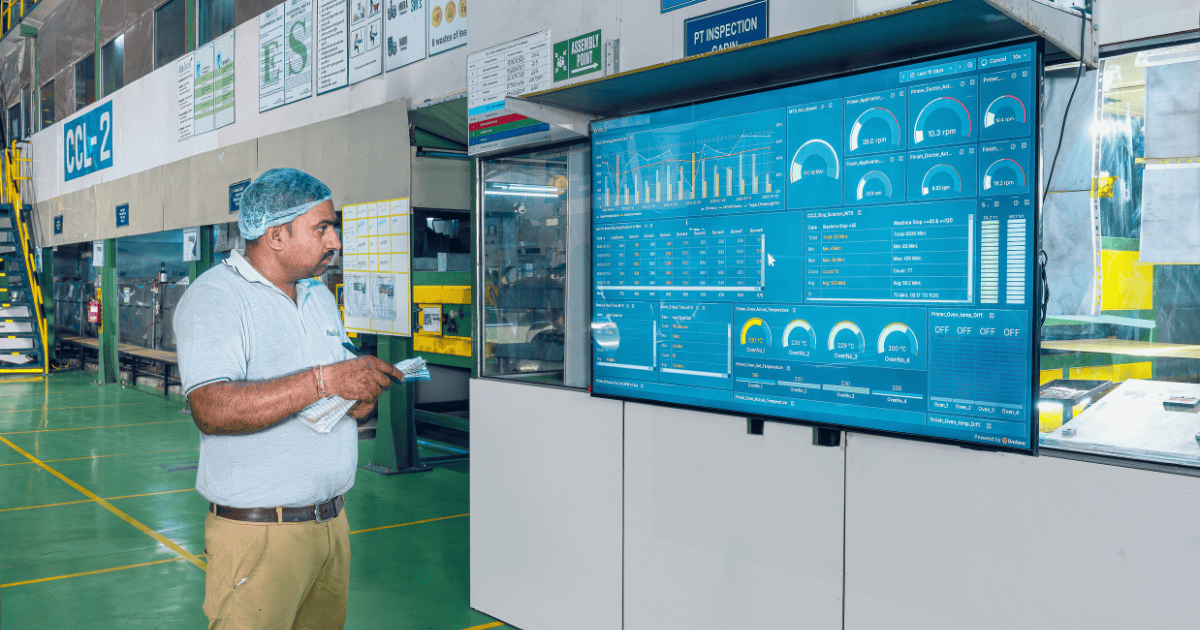
By contrast, in-house NABL-accredited laboratories allow continuous, batch-level testing of critical fire parameters. In this context, Aludecor is currently the only ACP manufacturer in India with an in-house NABL-accredited fire testing laboratory, enabling routine evaluation of Limiting Oxygen Index (LOI) and Smoke Density, two tests that directly reflect flame sustainability and visibility conditions during fire incidents. This capability allows fire behaviour to be monitored as an ongoing manufacturing discipline rather than an occasional compliance exercise.
Conclusion
NABL certification has emerged as a critical benchmark in ACP testing, offering clarity, comparability, and confidence in material performance. As façades become more complex and fire regulations more demanding, reliance on unverified or selectively tested products introduces unacceptable risk.
NABL certified ACP tests provide a structured, transparent framework that links laboratory results with real-world performance, covering fire behaviour, durability, and long-term reliability.
In a construction environment where accountability is rising and safety margins are narrowing, NABL-backed testing is no longer an added advantage but a baseline requirement. Recognised as India’s most tested and trusted ACP, Aludecor’s approach reflects this shift, reinforcing that responsible material selection is ultimately driven by evidence, not claims, a principle that will define future-ready architecture in the years ahead.
Call us at 1800-102-0407 or visit aludecor.com/enquiry to explore ACP solutions designed for performance and long-term aesthetic value.
FAQs
Q1. Is NABL mandatory for ACP panels?
While not universally mandatory, NABL certification is increasingly required for government, infrastructure, and high-rise projects.
Q2. How does NABL-certified ACP differ from non-certified ACP?
NABL-certified ACP offers verified performance, repeatability, and legal defensibility, unlike non-certified panels.
Q3. Which tests are covered under NABL accreditation?
Fire resistance, peel strength, impact resistance, corrosion, humidity, and weathering tests.
Q4. Does NABL certification ensure fire safety compliance?
Yes. NABL certification ensures that fire tests are conducted under controlled, audited, and globally benchmarked conditions


