


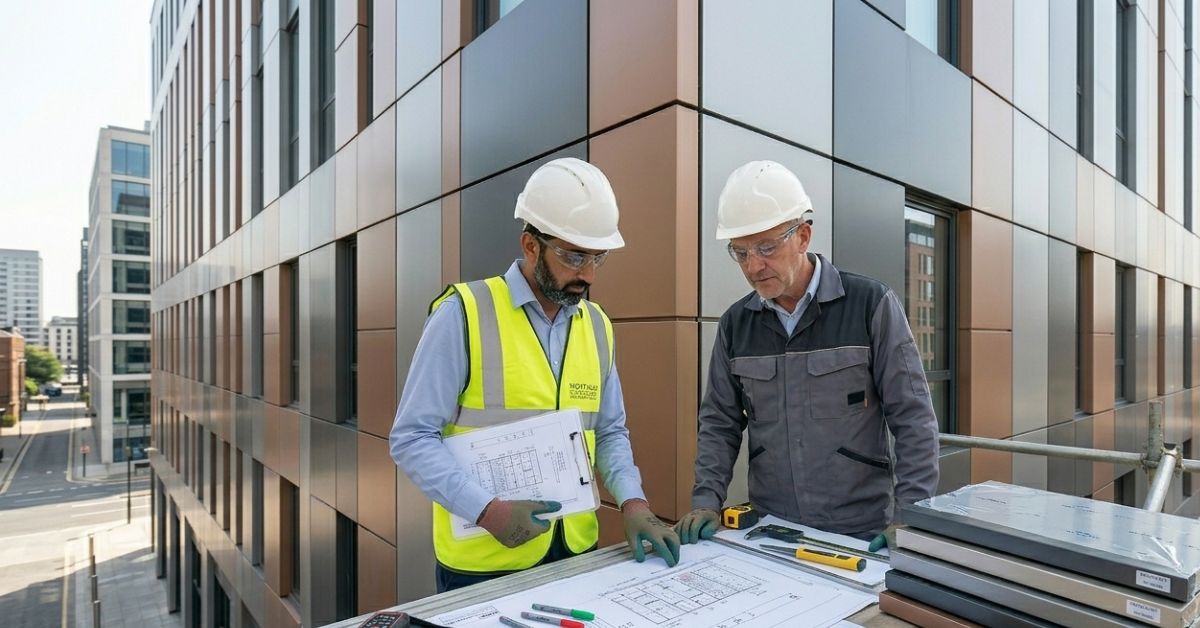
Walk through any growing Indian city and you’ll see aluminium composite panels everywhere, from office towers to hospitals and retail spaces. ACP has become a preferred façade material for good reason. It is lightweight, versatile in design and faster to install than many traditional cladding systems.
But here’s what often gets overlooked. A façade’s performance doesn’t depend on the material alone. It depends on how well the project is specified and executed. This is where the discussion around ACP specification vs installation becomes critical.
Many façade issues don’t arise from poor materials, but from a disconnect between design intent and on-site execution. Sometimes the specification lacks clarity. Other times, installation deviates from what was planned.
When specification and installation are not aligned, problems follow, distortion, leakage, inconsistent finishes and even safety risks. Understanding this gap is essential to ensuring façades perform reliably over time.
What is the Difference Between ACP Specification and Installation?
At the design stage, architects and consultants prepare the façade specification. This document outlines everything about the ACP system. Panel thickness. Core grade. Coating type. Fire performance classification. Subframe design. Jointing methods. Even the recommended fastening system.
Specification is essentially the blueprint. Installation, on the other hand, is the physical execution of that blueprint on site. Fabricators cut the panels, prepare the cassettes, mount the framing system and install the ACP cladding according to the approved design.
In theory the two should align perfectly, but the reality of ACP specification vs installation is often more complicated. Site conditions change. Fabricators may adopt shortcuts. Installers sometimes adapt techniques based on convenience rather than engineering.
And this small gap between design intent and on-site practice is where façade problems begin. From our experience at Aludecor, successful ACP projects are the ones where the teams treat ACP specification vs installation as a continuous collaboration rather than two separate phases.
Also Read:Façade Design Trends in High-Rise Construction You Need To Look Out For in 2026
Common Specification Mistakes in ACP Projects
Selecting the Right Core Grade for the Project Type
One of the most important elements of ACP specification is selecting the correct core material. ACP panels are typically available with low-density polyethylene cores, fire retardant mineral cores or non-combustible cores depending on the product design.
Yet many projects overlook this detail during early specification stages. Let’s say a high-rise commercial building is being designed. Fire safety regulations such as those aligned with NBC 2016 guidelines or international standards like EN 13501-1 demand stricter fire performance for façade materials. In such cases specifying a fire-retardant core becomes essential.
But if the specification does not clearly define the core requirement, installers may end up using panels not intended for that project category. Situations like these highlight the importance of understanding ACP specification vs installation from a safety perspective. At Aludecor, we ensure that architects are guided towards selecting appropriate core grades based on building type and regulatory expectations.
Overlooking Fire Safety and Certification Requirements
Fire safety has become a major focus in façade engineering across the world. But specification documents sometimes remain vague about certification requirements. Instead of clearly stating standards such as ASTM E84, BS 476 or EN 13501-1 classifications, the specification simply mentions generic terms like fire resistant panels.
This creates confusion during procurement and installation. Proper ACP specification vs installation coordination requires that certification standards are clearly mentioned. Panels must be tested and verified against recognised fire performance frameworks. Without this clarity, installers may unintentionally introduce materials that do not meet the intended safety criteria.
Ignoring Site Conditions During Specification
Another common mistake appears when specifications are prepared without fully understanding site conditions. Every project environment is different. Coastal areas expose buildings to saline air. Industrial zones may have higher atmospheric pollution. High altitude projects face stronger UV exposure and wind loads.
If these conditions are ignored, the selected ACP system may not perform optimally. Coating systems, panel thickness and framing design should all respond to local environmental stress factors. When they do not, the disconnect between the two becomes evident once the façade begins aging.
Installation Best Practices for Long Term Performance
Good specifications should also provide installation guidelines. Unfortunately, many specification documents stop at material selection and do not adequately describe how panels should be installed.
And this omission is where the ACP specification vs installation gap becomes visible again. Installation guidelines should include recommendations on framing alignment, expansion joints, panel bending radii and sealing methods. These details ensure the façade behaves predictably under temperature changes and wind pressure. Without them, installers may rely on trial and error.
Common Installation Errors That Impact Durability
Importance of Proper Framing, Fastening and Expansion Gaps
ACP panels expand and contract with temperature variation. Which means even minor temperature fluctuations can cause measurable movement across large façade surfaces. Proper framing systems therefore include calculated expansion gaps. These allow panels to move slightly without causing surface distortion. But when installers ignore these requirements, panels may begin to buckle or warp. This again reflects the importance of aligning ACP specification with installation practices carefully. At Aludecor, we regularly guide project teams on recommended framing and cassette fabrication methods to avoid such issues.
Coordination Between Architects, Fabricators and Installers
Facade installation is rarely a one team operation. Architects design the system. Fabricators shape the panels. Installers assemble them on site. And unless these teams communicate continuously, errors can occur. Panel bending tolerances may not match the design drawings. Subframe dimensions may vary slightly from approved plans.
These mismatches often stem from weak coordination within the ACP specification vs installation process. In successful projects, coordination meetings between consultants, fabricators and installers happen regularly during façade development.
Quality Checks Before, During and After Installation
Quality inspection is another stage that often receives less attention than it deserves. Panels should be inspected before fabrication to verify coating quality and dimensional accuracy. During installation, alignment and fastening must be checked systematically.
And once installation is complete, water sealing and joint finishing should be reviewed. Strong quality control procedures help ensure the objectives of ACP specification and the installation are actually realised on the building façade.
How Correct Specification and Installation Ensure Project Success
When specification and installation are aligned properly, ACP façades perform remarkably well. Panels remain flat and visually consistent. Joint lines appear neat and uniform. Thermal movement is accommodated without distortion. Fire performance requirements remain intact.
In other words, the façade behaves exactly the way the architect envisioned. From our perspective at Aludecor, the conversation around ACP specification vs installation should begin early in the design phase and continue until the final panel is installed.
Because a well-executed façade is never accidental. It is the result of thoughtful planning, clear communication and disciplined installation practices.
Also Read :Lifecycle Cost of ACP Sheets: What Architects Should Consider Beyond Price
Bridging the Gap Between Design and Installation
Modern façades demand precision. Materials alone cannot guarantee performance. That is why understanding ACP specification vs installation is essential for architects, consultants and project teams.
When both stages are handled carefully, ACP cladding delivers exceptional visual quality and long-term durability. But when they fall out of alignment, even the best materials may struggle to perform. And honestly, preventing such problems is far easier than fixing them after the façade is already installed.
FAQs
Why do many ACP projects fail despite using premium materials?
ACP projects often fail because the material itself was not the issue. The real problem lies in poor coordination between specification and installation.
If the specification does not clearly define core grade, coating type, fire performance standards and framing requirements, installers may interpret the design differently. Similarly, even when the specification is correct, improper installation techniques such as inadequate expansion gaps or poor fastening can compromise façade performance. This is why understanding ACP specification vs installation is critical for project success.
Can improper installation affect fire safety compliance?
Yes, installation practices can influence fire safety performance. For example, gaps between panels and framing members must follow recommended design practices. Incorrect installation can create unintended cavities or ventilation paths that may influence flame spread behaviour. Even if the panels themselves meet certified fire performance standards, poor installation can reduce the effectiveness of the overall façade system.
How important is selecting the correct ACP core grade?
Selecting the correct core grade is extremely important. Different buildings require different fire performance characteristics depending on height, occupancy type and local building regulations. Fire retardant cores contain mineral fillers designed to slow flame propagation, whereas standard polyethylene cores behave differently under fire conditions.
Architects should therefore specify the correct core type early in the project design stage. When core grade selection aligns with proper installation practices, the façade system performs safely and reliably over its lifecycle.


