


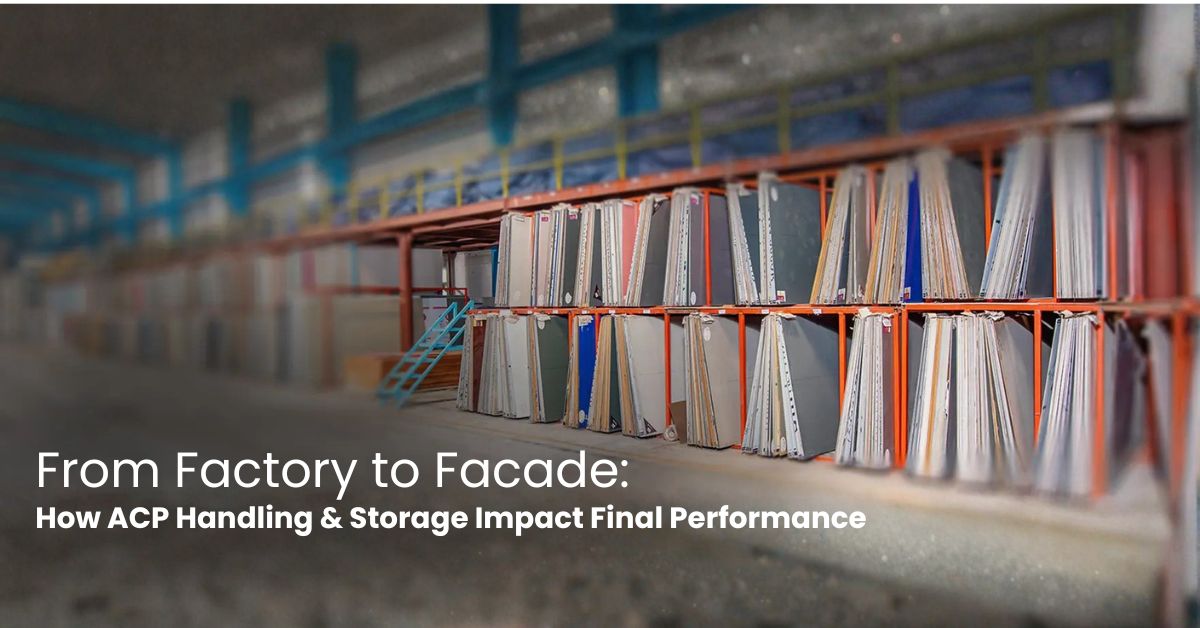
When people talk about façade performance, they usually focus on design, coating technology or fire classification. All valid discussions. But there’s another factor that quietly determines whether an ACP façade performs beautifully or develops problems early.
The journey from factory floor to finished façade matters more than many realise. Aluminium Composite Panels are engineered products. They are manufactured with precise coil thickness, bonding integrity and coating systems designed to perform for decades. But if the panels are mishandled during transportation, stored incorrectly or fabricated carelessly, even the best material can suffer. Let’s be honest. A façade panel scratched during unloading or bent during transport will not suddenly fix itself once installed.
This is why following a proper ACP panel handling guide is essential for dealers, fabricators and installation teams. Handling affects surface quality, coating integrity and dimensional stability. It also determines whether panels arrive at the façade exactly as they left the factory.
Across our projects, we’ve often noticed that teams who follow disciplined ACP handling and storage practices experience far fewer site issues. And when installers apply practical ACP installation tips, the final façade looks cleaner, performs better and lasts longer. So let’s walk through the journey of ACP panels from factory dispatch to façade installation and understand what truly makes a difference.
Safe Transportation Practices for ACP Panels
Transportation is the first stage where improper handling can cause damage. ACP panels may appear rigid, but they are still thin aluminium sheets bonded to a core material. If transported carelessly, they can experience bending stresses or surface abrasion.
A proper ACP panel handling guide always begins with transportation protocols. Panels should be transported in protective crates or pallets with rigid support underneath. These supports prevent panel flexing during transit. Ideally, pallets should be secured to the vehicle bed to minimise vibration movement.
Panels should always be carried vertically by at least two people when unloading. Dragging them across rough surfaces is one of the fastest ways to create scratches. Transport vehicles should also be covered to protect panels from dust, moisture and prolonged sunlight exposure.
Following these ACP installation tips during transportation ensures that panels reach the site without distortion or coating damage. Proper ACP handling and storage really begins long before the panels reach the construction site.
Also Read : Achieve Sleek Aesthetics with Premium Gloss Aluminium Panels from Aludecor
Ideal Storage Conditions at Warehouse & Site
Once ACP panels reach the warehouse or project site, storage conditions become critical. ACP sheets are designed for exterior durability, but prolonged exposure to moisture or heat before installation can still affect performance.
According to most industry ACP panel handling guide recommendations, panels should be stored in dry, well-ventilated spaces. Direct contact with water or wet ground must be avoided. Panels should also be protected from direct sunlight during storage, because excessive heat can soften protective films and make them difficult to remove later.
Another important factor in ACP handling and storage is floor support. Panels should always be placed on flat wooden pallets rather than directly on concrete floors. This prevents uneven stress and edge deformation and if storage lasts several weeks, periodic inspection is advisable. This helps ensure that protective films remain intact and panels remain clean. These small precautions are part of the practical ACP installation tips that ensure panels remain in perfect condition until fabrication begins.
Stacking & Positioning Guidelines for ACP Sheets
Stacking is one of the most underestimated aspects of ACP storage. Improper stacking can cause panel bending, surface pressure marks or edge damage. A professional ACP panel handling guide always recommends stacking panels horizontally on level pallets with full surface support. Stack height should also be controlled. Excessive stacking weight can place pressure on lower panels, especially if they are large format sheets.
Wooden spacers between stacks are helpful because they distribute weight evenly and improve airflow around the panels. Another key aspect of ACP handling and storage involves panel alignment. Panels should be stacked flush without overhanging edges.
Overhanging sheets can slowly deform under their own weight. And once deformation occurs, achieving perfect façade alignment becomes difficult. These stacking precautions may seem simple, but they are extremely effective ACP installation tips for preserving panel flatness before fabrication.
Preventing Surface Scratches & Edge Damage
Surface scratches are one of the most common issues seen on construction sites. They often occur during manual handling or when panels are placed on abrasive surfaces. Following a disciplined ACP panel handling guide can prevent most of these problems.
First rule. Never drag ACP panels across each other. Panels should always be lifted, not slid. Second rule. Use clean gloves when handling ACP sheets. Dust particles trapped between panels and gloves can act like abrasive materials and scratch coatings.
Another important aspect of ACP handling and storage is edge protection. Panel edges are vulnerable during transportation and fabrication. Using protective corner guards during transport helps minimise impact damage. These may seem like small details. But they are among the most practical ACP installation tips for maintaining façade aesthetics, because once a coating is scratched deeply, it becomes visible even after installation.
Managing Protective Film Before Installation
Protective films are designed to safeguard ACP surfaces during transportation, storage and fabrication. But they must be handled correctly. A proper ACP panel handling guide recommends keeping the protective film intact during fabrication processes such as cutting, routing and bending. The film should only be removed immediately before final installation, because premature removal exposes the panel surface to dust, tools and accidental scratches.
However, protective films should not remain on panels indefinitely either. If panels remain stored for extended periods, the adhesive in the protective film may harden due to heat exposure. This can make removal difficult. Therefore, part of responsible ACP handling and storage includes planning installation schedules so panels are not stored for excessive durations. Following such ACP installation tips ensures the façade surface remains clean and uniform.
Also Read :The Advantages of Using ACP for Hospital Facade and Elevation Design
Fabrication & On-Site Handling Best Practices
Fabrication is where ACP sheets transform into façade components. Panels are cut, grooved, bent and assembled into cassette systems or tray panels. During fabrication, following the ACP panel handling guide becomes extremely important.
Work tables should always be clean and smooth to prevent scratches. Tools used for routing and cutting must be properly calibrated to avoid damaging aluminium skins. Another aspect of ACP handling and storage during fabrication involves panel orientation. Panels should be handled carefully when rotating or repositioning during routing operations.
Panels should also be stored vertically after fabrication to prevent surface contact between finished pieces. Applying these ACP installation tips ensures that fabricated panels maintain their dimensional precision and surface finish.
Common Handling Mistakes to Avoid
Even experienced teams sometimes overlook basic handling principles and these small mistakes can lead to costly façade defects. One common mistake is dragging panels across rough surfaces. This immediately damages coatings.
Another frequent issue in ACP handling and storage is stacking panels unevenly. Overhanging edges may bend gradually under weight. Protective film removal is another area where mistakes occur. Removing the film too early exposes panels to construction dust and tools and perhaps the most overlooked issue is storing panels in direct sunlight for long periods.
A reliable ACP panel handling guide always emphasises shade storage and dry conditions, avoiding these mistakes is among the most valuable ACP installation tips for achieving a flawless facade.
When Careful Handling Creates Better Façades
The performance of ACP panels does not depend only on manufacturing quality. It also depends on how responsibly they are handled throughout the project lifecycle. From transportation and storage to fabrication and installation, every stage influences the final façade appearance.
When teams follow a structured ACP panel handling guide, panels reach the façade exactly as intended. Surfaces remain scratch free. Edges stay intact. Panels maintain their flatness and alignment.
At Aludecor, we always emphasise that correct ACP handling and storage practices are just as important as material quality itself. And when installers follow practical ACP installation tips, the result is a façade that not only looks precise on day one but also performs reliably for years to come.
Call us at 1800 102 0407 or visit aludecor.com/enquiry to explore ACP solutions designed for performance and long-term aesthetic value.
FAQ
How should ACP sheets be transported to prevent bending?
ACP sheets should be transported on rigid pallets with full support underneath the panels. The stacks must be secured to prevent movement during transit. Panels should always be lifted vertically by at least two people during unloading. Following a proper ACP panel handling guide helps prevent bending stresses and surface damage during transportation.
When should the protective film be removed?
Protective films should remain on ACP panels during transportation, storage and fabrication processes. The film should be removed only immediately before installation. This approach ensures that the panel surface remains protected from dust, tools and accidental scratches during site activities. These steps form an important part of responsible ACP handling and storage.
Does improper handling affect coating performance?
Yes, improper handling can damage the coating layer of ACP panels. Scratches, abrasions or impact damage can compromise the protective paint system. Following recommended ACP installation tips such as lifting panels rather than dragging them and using clean gloves during handling helps maintain coating integrity.
How long can ACP sheets be stored before installation?
ACP sheets can typically be stored for several months if kept in dry, shaded and well ventilated environments. However, prolonged exposure to direct sunlight or moisture should be avoided. Proper ACP handling and storage ensures that panels remain in optimal condition until installation.
What stacking method is recommended for ACP panels?
Panels should be stacked horizontally on flat wooden pallets with full surface support. Stack heights should be controlled to prevent excessive weight on lower panels. Aligning panels evenly without overhanging edges is also essential. These practices are recommended in every professional ACP panel handling guide to maintain panel flatness and surface quality.


