Modern façade engineering today stands at the crossroads of performance, sustainability, and design precision. With buildings across India evolving towards smarter, high-performance envelopes, the demand for materials that balance strength, longevity, flexibility, and cost efficiency is higher than ever. Among the many façade choices, the ACP board and the solid aluminium panel remain two of the most widely evaluated options.
Each offers distinct structural and aesthetic benefits – but selecting the right one requires an understanding of their composition, performance in Indian climates, and long-term lifecycle value. As one of India’s most tested and trusted ACP manufacturers, Aludecor continues to enable informed decision-making by providing high-quality façade materials engineered for architectural reliability.
This detailed comparison helps architects, engineers, and government project teams understand how both materials perform across critical parameters.
What’s the Difference Between ACP Board and Solid Aluminium Panels?
An ACP board (also known as aluminium composite board) is composed of two thin aluminium sheets bonded to a polyethylene mineral core. This “sandwich construction” delivers rigidity while keeping the panel lightweight. The structure is engineered to maintain flatness even over large elevations.
A solid aluminium panel, on the other hand, is a single-layer metal sheet, normally 2-4 mm thick, made from high-grade aluminium alloy. It offers exceptional strength, uniformity and is preferred for environments requiring high impact resistance or strict fire-safety requirements.
Key distinction
- ACP = Composite structure (metal + core)
- Solid aluminium = Single metal sheet
Both materials serve architectural facades, but their performance varies depending on project needs.
Weight & Installation
Weight affects installation speed, structural load, and design flexibility.
ACP Board
- Lightweight due to its composite core
- Faster installation and easier handling
- Reduces load on building structure
- Ideal for large façades and retro fitting
Solid Aluminium Panel
- Heavier single-metal composition
- Requires strong sub-framing
- Higher transportation and lifting effort
Which is easier to handle and install?
ACP boards are significantly lighter, often 30–40% lighter than comparable solid sheets making them easier to transport and fix on-site. This improves safety and reduces installation time on high-rise facades.

Durability & Impact Resistance
Durability determines long-term performance, especially for high-traffic or weather-exposed structures. The structural stability of an aluminium composite board also allows uniform thermal behaviour, minimising stress during seasonal expansion.
ACP Board
- Excellent rigidity with a stable core
- Resistant to moderate impact
- Maintains surface flatness
- Suitable for most building elevations
Solid Aluminium Panel
- Exceptional tensile strength
- High resistance to dents and heavy impact
- Performs reliably in industrial or airport environments
The ACP panel board performs well for residential, commercial, and government buildings, while solid sheets are preferred in high-stress zones requiring maximum robustness.
Also Read : ACP in Industrial Buildings: Durability Meets Design
Fire Resistance & Safety
India’s updated building codes place greater emphasis on flame spread, smoke emission, and material combustibility. When specifying façade materials, many consultants compare an aluminium composite panel sheet with a solid metal sheet to evaluate flame spread, smoke evolution, and structural performance under extreme heat.
ACP Board
- Available in A2 and Class B FR grades
- Mineral core slows flame spread
- Suitable for most façade applications when FR-certified
Solid Aluminium Panel
- Completely non-combustible
- Offers highest fire safety rating
- Ideal for high-rise towers, transit hubs, and safety-critical buildings
Which material offers better fire protection?
Solid aluminium provides the highest fire safety due to its metal-only construction. However, modern FR-grade ACP boards also meet stringent fire-safety requirements for most architectural applications.
Also Read : Is ACP Cladding Fire Safe & Durable?
Aesthetic Flexibility & Finishes
A building façade must perform technically – but must also express identity and design intent.
ACP Board
- Extremely versatile
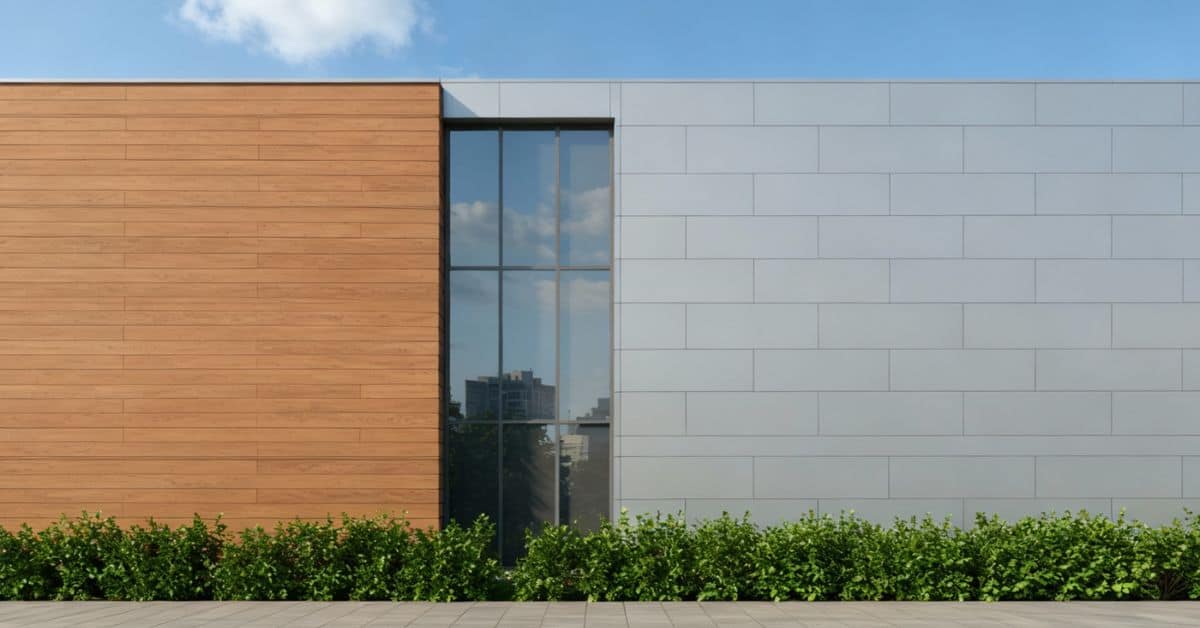
- Available in wood, stone, concrete, metallic, brushed, high-gloss, textured, and custom finishes
- Supports bending, routing, folding, perforation, and 3D shaping
- Preferred for innovative architectural designs
Solid Aluminium Panel
- Offers premium metal aesthetics
- Ideal for anodised finishes and high-performance metallic tones
- More rigid, limiting deep curvature or complex geometries
For projects demanding creative façade languages, aluminium composite board systems deliver far greater flexibility than solid aluminium.
Cost Comparison & Lifecycle Value
Material cost, installation effort, and long-term maintenance influence total project value.
ACP Board
- More cost-effective
- Lower installation labour
- Minimal structural reinforcements needed
- Excellent lifecycle value
Solid Aluminium Panel
- Higher upfront cost
- Requires stronger substructure
- Long lifespan but increased installation expense
Is ACP more economical than solid aluminium?
Yes. ACP panel board generally offer a more cost-optimised solution, especially for large façades that require design variety and weight efficiency. Solid aluminium panels justify their cost only in heavy-duty or fire-critical environments.
Recycling & Environmental Impact
Sustainable materials remain essential to achieving green building certifications. The recyclability of an aluminium composite panel sheet further strengthens its position as a sustainable façade choice in modern architecture.
ACP Board
- Recyclable through modern separation processes
- Low material-to-strength ratio reduces embodied energy
- Lightweight panels lower transportation emissions
Solid Aluminium Panel
- 100% recyclable
- High scrap value
- Long lifespan reduces replacement cycles
Environmental performance improves significantly when choosing manufacturers with eco-conscious production lines. Aludecor incorporates advanced coatings, energy-efficient processes, and low-VOC systems-enhancing both performance and sustainability.
Maintenance Tips for ACP Board and Solid Aluminium Panels
Regular maintenance enhances façade longevity and preserves surface appearance.
ACP Board
- Clean annually with mild detergent
- Inspect sealants and joints
- Replace damaged modules easily due to modularity
Solid Aluminium Panel
- Requires occasional washing
- Anodised finishes need minimal upkeep
- Extremely long surface life in harsh environments
Conclusion
The decision between an ACP board and a solid aluminium panel depends entirely on project priorities. ACP boards offer unmatched design freedom, ease of installation, and cost efficiency, making them a preferred choice for creative façades across modern residential, commercial, and institutional buildings. Solid aluminium panels, on the other hand, excel in maximum fire resistance, impact strength, and performance stability in demanding environments.
As India’s most tested and trusted ACP, Aludecor continues to provide architects and planners with reliable aluminium composite board solutions engineered for longevity, precision, and visual sophistication. With diverse finishes, FR-grade options, and proven material science, Aludecor’s systems empower project teams to achieve façade excellence across India’s varied climatic conditions.
In summary:
- Choose ACP for flexibility, economy, and architectural expression
- Choose solid aluminium for extreme durability and top-tier fire safety
Both materials deliver value, but their suitability depends on the design vision and performance expectations of the project. In façade refurbishments, an ACP panel board provides modularity and ease of replacement, an advantage not always available with heavy-gauge metal sheets.
FAQs
Q1. Which is lighter and easier to install – ACP board or solid aluminium panels?
ACP boards are significantly lighter, easier to handle, and quicker to install. Solid aluminium panels require stronger framing and more labour effort.
Q2. Which offers better fire protection?
Solid aluminium panels are fully non-combustible. FR-grade ACP boards provide excellent fire-resistant performance for most architectural uses.
Q3. Is ACP the same as solid aluminium panel?
No. ACP is a composite material with a mineral core, while solid aluminium is a single-thickness metal sheet.
Q4. Are both materials suitable for high-rise buildings?
Yes. ACP works well with FR grades, while solid aluminium is preferred when absolute fire integrity is required.