


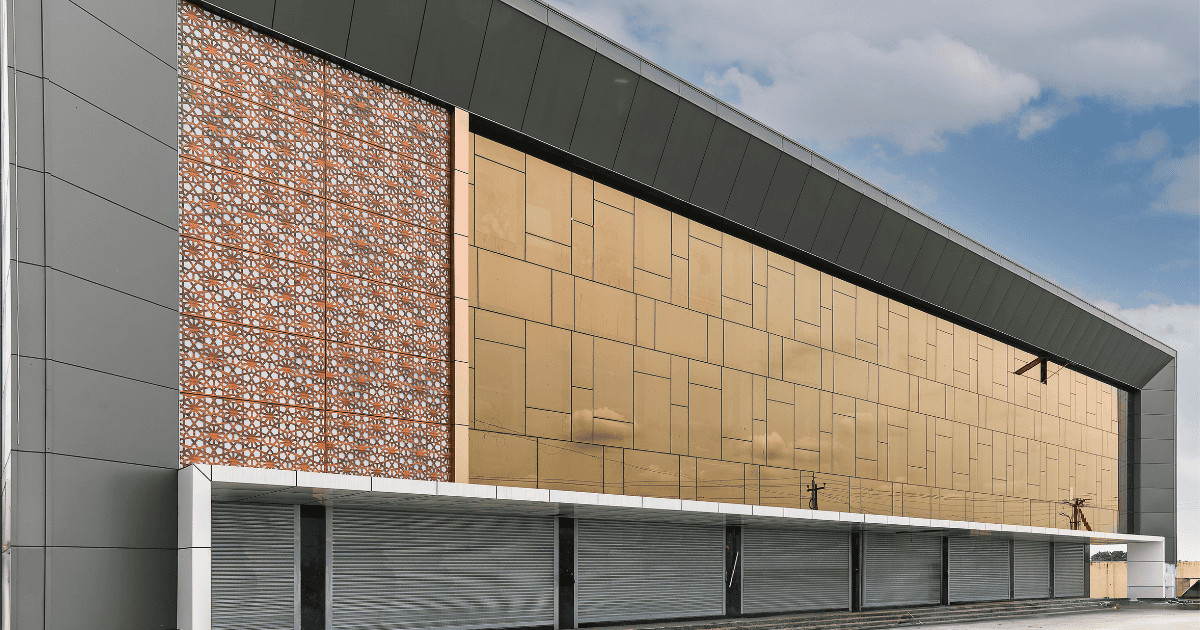
Modern buildings depend heavily on their façades. The outer envelope does far more than shape the visual identity of a structure. It protects interiors from weather, regulates thermal behaviour, contributes to fire safety and withstands mechanical loads every single day.
Yet when façade problems appear, most people instinctively look at installation errors first. In reality, many façade issues originate much earlier – during the material selection stage.
On paper, many façade systems appear technically sound. Samples look impressive, brochures promise performance and specifications seem comprehensive. But if the chosen material does not suit the building environment or regulatory requirements, the façade begins its lifecycle with a hidden weakness.
Industry studies and project audits repeatedly highlight that long-term façade problems often originate from incorrect material specification, poor coating durability, inadequate fire classification or insufficient structural capability. Collectively, these factors represent some of the most common façade failure causes seen in modern construction.
This is precisely why architects, façade consultants and developers are now becoming far more meticulous during the material selection phase.
The Role of Material Selection in Façade Failure Causes
Façade systems function like protective skins for buildings. Every component within the system must perform together with precision. When a panel material lacks adequate mechanical strength or fire resistance, performance deterioration gradually begins. This is where several façade failure causes originate.
Panels may warp due to thermal expansion. Surface coatings may degrade earlier than expected. In more serious cases, the core material might not meet fire safety requirements for high-rise structures. These situations are rarely installation errors. They are specification problems.
Professionals investigating why façades fail often discover that the material properties were simply not aligned with the building’s operational environment. A façade designed for moderate exposure conditions cannot reliably perform in areas with high pollution levels or coastal salinity.
Across many urban developments, the most recurring building façade failure reasons can be traced back to decisions made during early design or procurement stages. For this reason, material selection deserves significantly more attention than it typically receives.

Understanding Project-Specific Requirements Before Selection
Every construction project operates under unique environmental and structural pressures. A commercial tower located in a dense urban zone experiences intense pollution and temperature fluctuations. Coastal buildings face saline air that accelerates corrosion. Tall structures constantly encounter high wind loads that test façade stability.
Ignoring such parameters can easily become one of the silent façade failure causes. Before selecting ACP panels, professionals must carefully analyse multiple factors: wind load calculations based on building height, ultraviolet radiation affecting coating longevity and fire compliance requirements defined by regional building codes. Such evaluation often explains why façades fail in certain projects while others perform reliably for decades.
At Aludecor, we always recommend analysing environmental data before finalising panel specifications. Many building façade failure reasons arise simply because a standard product was used in a highly demanding environment. A façade must respond to its surroundings. Otherwise, deterioration begins gradually and often unnoticed.
Choosing the Right Core Grade for Safety and Compliance
Core composition within ACP panels directly determines fire behaviour. Standard polyethylene cores are combustible. Fire-retardant cores incorporate mineral fillers designed to slow flame spread. Higher classification such as A2-s1, d0 demonstrates significantly stronger resistance to fire propagation.
Selecting an inappropriate core grade has unfortunately contributed to several major façade failure causes globally. High-rise buildings must comply with established fire testing frameworks such as EN 13501-1 classifications depending on regional regulations. Panels used on such structures must demonstrate controlled flame spread and acceptable calorific values. When investigators analyse why façades fail, specification gaps in fire safety performance are frequently discovered.
At Aludecor, we manufacture certified fire-retardant ACP panels that undergo rigorous testing at our NABL-accredited in-house reaction-to-fire testing facilities. These panels are designed to meet modern safety expectations and help minimise several building façade failure reasons associated with combustible cladding. When it comes to fire protection, the core grade cannot be treated casually.
Also Read :Why Third-Party Testing Is Becoming a Key Requirement in Large Projects

Importance of Fire Ratings and Certified Test Reports
Technical documentation plays a far greater role in façade reliability than many project teams realise. Numerous façade issues have been traced to materials that claimed performance capabilities but lacked verified testing evidence. Without certified reports, it becomes extremely difficult to validate behaviour under extreme conditions.
The absence of proper certification can therefore become another hidden contributor to façade failure causes. Fire performance reports typically include calorific value assessments, smoke density evaluation and reaction-to-fire classifications. These parameters allow consultants to determine whether a façade material meets regulatory benchmarks.
When experts investigate why façades fail, incomplete or misunderstood documentation often emerges as a key factor during procurement.
Coating Systems and Long-Term Weather Resistance
Surface coatings determine how effectively a façade resists environmental exposure. High-performance coatings such as PVDF provide excellent protection against ultraviolet radiation, humidity and atmospheric pollutants. Polyester coatings, while more economical, may show earlier fading and chalking in harsh conditions.
Incorrect coating selection has quietly contributed to multiple façade failure causes in commercial buildings. When consultants examine why façades fail, visual deterioration, such as colour fading, gloss loss or surface cracking, often becomes visible within a few years. Although these are not structural failures, they significantly impact the building’s appearance and long-term maintenance costs.
At Aludecor, we employ advanced coating technologies engineered for durability. Our PVDF-coated ACP panels are designed to retain colour stability and resist environmental degradation for extended periods. Ignoring coating performance remains one of the most underestimated building façade failure reasons in façade design.
Structural Strength and Wind Load Considerations
Façade panels must withstand dynamic wind forces throughout their entire lifecycle. Tall buildings experience fluctuating wind pressures depending on height and exposure conditions. Panels must therefore maintain dimensional stability and resist deflection under repeated loading cycles.
Failure to evaluate structural behaviour becomes another contributor to façade failure causes. When engineers analyse why façades fail, they often identify excessive panel deflection, fastener fatigue or substructure stress as root problems. These issues typically arise when panel thickness, aluminium skin gauge or fixing systems are not properly matched to wind load conditions.
At Aludecor, ACP panels are engineered with robust aluminium skins and carefully designed cores to ensure adequate rigidity. Mechanical testing helps reduce potential building façade failure reasons related to structural performance over time. Façade stability is not determined only during installation. It begins with correct material engineering.
The Risk of Prioritising Cost Over Performance
Budget considerations influence almost every construction project. However, choosing façade materials purely based on price often introduces long-term risks. Lower-cost panels may involve compromises in aluminium thickness, coating durability or fire-retardant composition.
Over time, such compromises gradually evolve into serious façade failure causes. Developers reviewing maintenance challenges frequently realise that the initial savings were insignificant compared to repair expenses. Surface degradation, panel distortion or regulatory non-compliance can eventually require partial façade replacement.
Industry discussions around why façades fail increasingly highlight the dangers of cost-driven material decisions. At Aludecor, we encourage clients to evaluate lifecycle performance rather than immediate cost alone. Durable ACP panels supported by verified testing can significantly reduce long-term maintenance challenges and eliminate many building façade failure reasons before they arise. Short-term savings rarely justify long-term risk.
Also Read : The Science Behind Long-Term Colour Stability in ACP Sheets
Key to Preventing Façade Failures
Façade systems represent one of the most visible and technically demanding components of a building. Their performance depends on careful engineering, reliable materials and accurate specification. A significant proportion of documented façade failure causes originate during early design decisions, when materials are selected without fully evaluating project conditions.
Understanding the consequences of façade failure helps architects and developers recognise the importance of fire safety, structural capability, coating durability and certified testing. When these factors are considered carefully, most building façade failure reasons can be avoided entirely.
At Aludecor, we believe façade materials must deliver both safety and longevity. Through advanced manufacturing, rigorous testing and performance-driven engineering, we aim to support projects that remain reliable for decades. Because a well-engineered façade does more than protect a building. It protects the reputation of everyone involved in creating it.
Call us at 1800-102-0407 or visit aludecor.com/enquiry to explore ACP solutions designed for performance and long-term aesthetic value.
FAQs
What are the most common causes of façade failures?
The most frequent issues include incorrect material specification, improper fire-rated core selection, inadequate coating durability and structural limitations under wind loads. Improper joint detailing and weak substructure design may also contribute to façade deterioration over time.
Environmental conditions such as pollution, UV exposure and coastal corrosion must also be considered during material selection. Careful specification, verified testing and proper engineering evaluation can prevent most long-term façade problems.
Is cheaper ACP always riskier for high-rise projects?
Lower-priced ACPs are not automatically unsafe, but they may involve compromises in aluminium thickness, coating quality or fire-retardant composition. High-rise structures require panels that meet strict fire safety classifications, structural strength requirements and weather resistance standards.
When developers select materials without verifying these parameters, performance risks increase significantly.
Does incorrect ACP sheet selection impact safety?
Yes. Incorrect ACP specification can affect both fire safety and structural reliability. Panels with combustible cores may accelerate flame spread during fire incidents. Similarly, panels with insufficient thickness or weak fixing systems may fail under strong wind loads.
Proper ACP selection should always consider fire ratings, structural strength, coating durability and compliance with recognised testing standards to ensure long-term façade stability.


