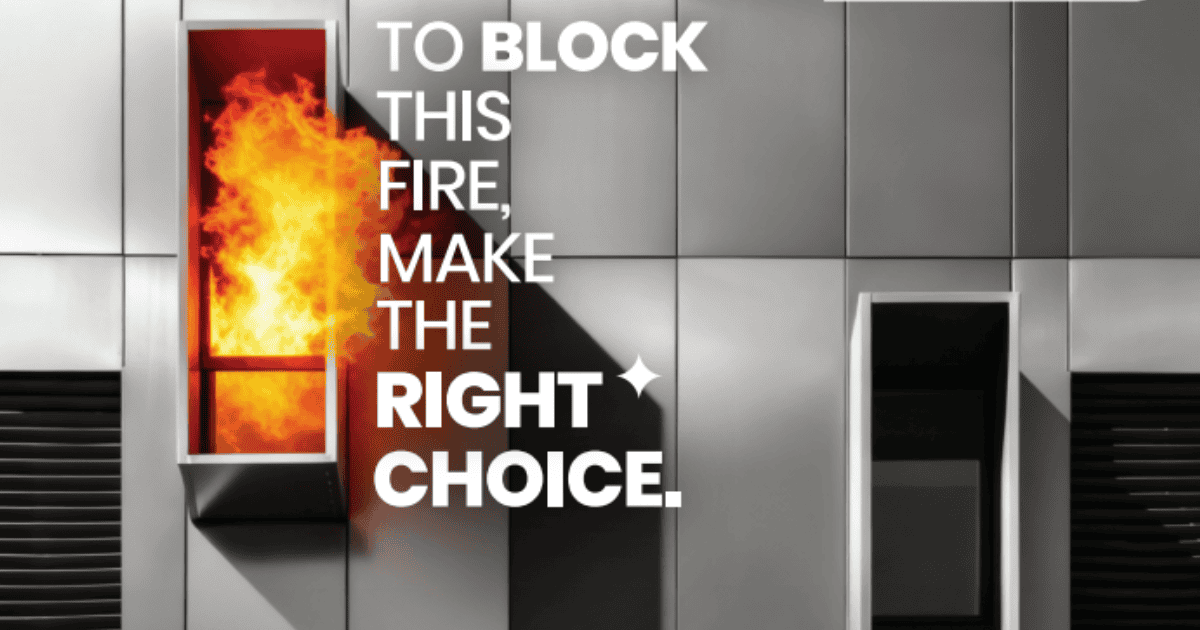
Urban skylines across India are rising faster than ever. Commercial towers, hospitals, transit hubs, mixed-use developments, and institutional campuses increasingly rely on aluminium composite panels (ACP) to achieve lightweight construction, architectural flexibility, and faster installation. However, as buildings grow taller and denser, facade safety is no longer a peripheral concern. Fire behaviour has become a defining performance parameter for envelope materials.
High-profile facade fire incidents worldwide have demonstrated how material choice can influence evacuation safety, property damage, insurance exposure, and regulatory scrutiny. In this environment, Fire-Tested ACP Sheets are not simply a premium specification choice. They are becoming a baseline requirement for responsible construction.
Recognised as India’s most tested and trusted ACP, Aludecor approaches fire testing not as a regulatory checkbox but as a continuous engineering discipline embedded within manufacturing, quality control, and documentation. Understanding how ACP sheets are tested, which global standards apply, and how compliance is validated enables architects, builders, and government bodies to make informed, risk-aware decisions.
Importance of Fire Testing for ACP Sheets
ACP panels are installed over large facade areas and frequently span multiple storeys. In a fire scenario, their behaviour directly affects flame spread, smoke generation, heat release, and visibility during evacuation. Even small variations in core composition, bonding quality, or coating behaviour can significantly alter fire response.
Fire-Tested ACP Sheets undergo controlled laboratory evaluation to confirm:
- Resistance to ignition and flame propagation
- Smoke emission levels and toxicity indicators
- Formation of flaming droplets
- Structural integrity during heat exposure
- Lateral flame spread and heat release rate
In high-rise and high-occupancy buildings, façade fire propagation can accelerate rapidly due to stack effect and wind pressure. Panels that lack validated fire behaviour introduce unpredictable risk. Testing converts assumptions into measurable engineering data.
For project stakeholders, certified fire tested ACP sheets provide confidence that the declared performance aligns with actual material behaviour under stress conditions rather than theoretical claims.
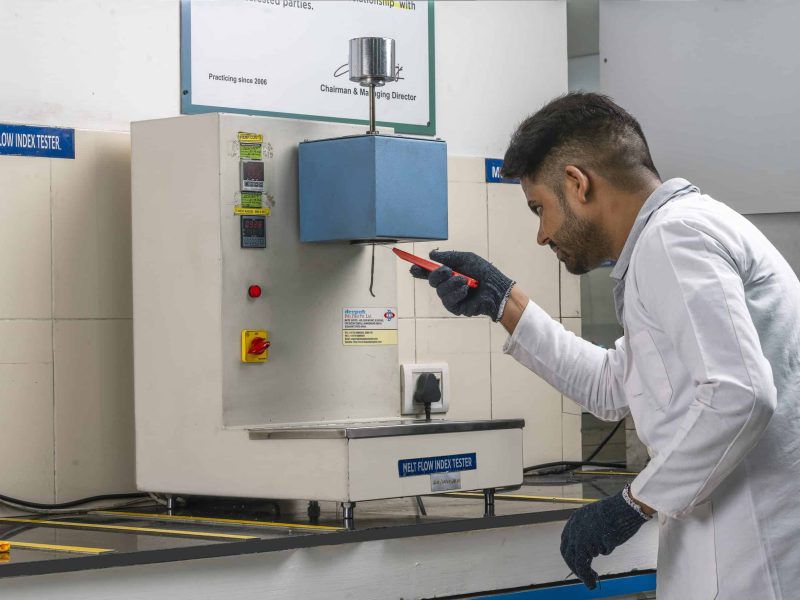
Overview of Global Fire Safety Standards
Fire safety standards exist to create consistency, comparability, and accountability across materials and markets. ACP panels are commonly evaluated using multiple international benchmarks depending on project jurisdiction.
EN 13501-1 (Europe)
This standard classifies materials based on reaction-to-fire behaviour. Ratings such as A2-s1,d0 and B-s1,d0 assess combustibility, smoke density, lateral flame spread, heat release rate and flaming droplets. These classifications are widely referenced for façade applications in regulated environments.
ASTM Standards (United States)
ASTM E84 evaluates surface burning characteristics, while ASTM E119 measures fire endurance performance of assemblies.
NFPA 285
A full-scale facade assembly test that evaluates vertical and lateral flame propagation across cladding systems, we can measure the temperature during heat generation.
BIS Standards (India)
Indian standards align with international fire testing principles and are increasingly harmonised with global benchmarks.
Together, these standards ensure that fire rated aluminium composite panels demonstrate predictable and verifiable behaviour under consistent testing conditions.
Also Read : ACP Testing Standards Guide: What Each Test Really Measures
Fire-Tested ACP Sheets and Global Compliance: How Performance Is Validated
Compliance is not achieved through a single laboratory report. Reliable fire performance depends on a layered validation approach covering materials, processes, and finished products.
Multi-Stage Testing Framework
Effective fire compliance integrates:
- Raw material validation of aluminium skins, mineral fillers, and additives
- In-process monitoring of lamination quality and bonding integrity
- Finished panel fire performance verification
- Periodic re-validation and audit testing
This approach reduces batch variation and ensures repeatable behaviour across production cycles.
Documentation and Traceability
Certified reports provide traceability for:
- Test method and laboratory accreditation
- Sample preparation and conditioning
- Measurement accuracy and repeatability
- Result interpretation and classification
For regulatory bodies and consultants, traceable documentation transforms Fire-Tested ACP Sheets into defensible engineering evidence rather than marketing collateral.
Also Read : Why NABL Certification Is Essential for ACP Testing
Aludecor’s Fire-Tested ACP: Features & Benefits
Aludecor integrates fire testing across manufacturing rather than treating it as a one-time certification exercise. Panels are evaluated not only for compliance but also for long-term stability and consistency.
Key performance attributes include:
- Mineral-rich FR and A2 core compositions aligned with global reaction-to-fire classifications
- Continuous factory production control to minimise variability
- Periodic verification across multiple test parameters
- Integration with long-term weathering and durability testing
This methodology ensures that fire tested acp sheets retain predictable behaviour even after prolonged environmental exposure.
Beyond safety, stable fire performance supports:
- Faster regulatory approvals
- Reduced liability exposure
- Improved insurer confidence
- Greater lifecycle reliability
How Fire-Tested ACP Protects People and Property
Fire safety is fundamentally about time and predictability. Panels that resist flame propagation and suppress smoke generation provide additional evacuation windows and improved visibility during emergency response.
Fire rated aluminium composite panels contribute by:
- Limiting vertical and lateral flame spread along façades
- Reducing smoke density that impairs evacuation
- Preventing flaming droplets that ignite secondary materials
- Maintaining façade stability during early fire stages
- Least heat release rate
From a property perspective, controlled fire behaviour reduces secondary damage, restoration cost, and business interruption exposure.
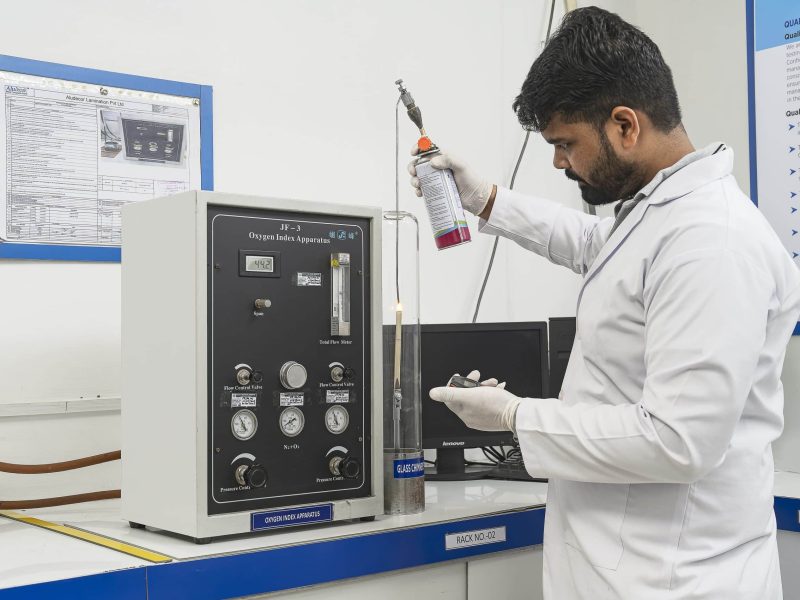
How are ACP fire tests conducted?
Panels are exposed to calibrated heat and flame sources in controlled laboratories. Parameters such as flame spread, smoke density, and dripping behaviour are measured against international standards.
Comparison: Fire-Tested ACP Sheets vs Non-Tested ACP
Before selecting ACP purely on appearance or price, performance validation should be examined carefully.
| Parameter | Fire-Tested ACP Sheets | Non-Tested ACP |
| Fire behaviour | Certified reaction-to-fire performance | Often undocumented |
| Smoke control | Verified emission limits | Unpredictable |
| Consistency | Batch-level monitoring | Variable |
| Regulatory acceptance | Widely accepted | Frequently questioned |
| Insurance acceptance | High | Limited |
| Lifecycle risk | Low | High |
This comparison demonstrates how fire tested acp sheets reduce technical, regulatory, and operational uncertainty.
Are fire-tested ACP sheets mandatory for high-rise buildings?
Many high-rise and public infrastructure projects increasingly mandate certified fire performance. Authorities prioritise materials that demonstrate predictable reaction-to-fire behaviour to minimise evacuation risk and regulatory liability.
Do fire-tested ACP sheets improve insurance acceptance?
Yes. Insurers typically favour materials with traceable test documentation because validated fire behaviour reduces potential loss exposure and claim disputes.
Conclusion
Facade safety has moved decisively into the domain of engineering accountability. As buildings grow taller and more complex, reliance on validated performance frameworks becomes essential rather than optional. Fire-Tested ACP Sheets provide measurable assurance that materials behave predictably under real fire conditions, supporting regulatory compliance, occupant safety, and long-term asset protection.
When fire rated aluminium composite panels are backed by consistent testing, traceability, and process discipline, they transform façade risk management from assumption to evidence-based decision making. Recognised as India’s most tested and trusted ACP, Aludecor’s approach reflects this evolution, reinforcing that safety credibility is built through continuous validation rather than isolated certification.
In a regulatory environment where accountability continues to tighten, fire tested acp sheets will remain a cornerstone of responsible, future-ready architecture.
For FREE ACP test register at aludecor.com
FAQs
Q1. Which global standards does Aludecor comply with?
EN 13501-1, ASTM standards, NFPA façade testing protocols, and applicable BIS requirements.
Q2. How do fire tests work for ACP panels?
Panels are exposed to controlled flame and heat sources. Flame spread, smoke density, and thermal behaviour are measured and classified.
Q3. Can fire-tested ACP be used in high-rise buildings?
Yes. Certified systems are commonly specified for high-rise and public infrastructure projects.
Q4. How long does ACP maintain its fire-resistant properties?
When manufactured and maintained correctly, fire performance remains stable throughout the panel’s service life.