

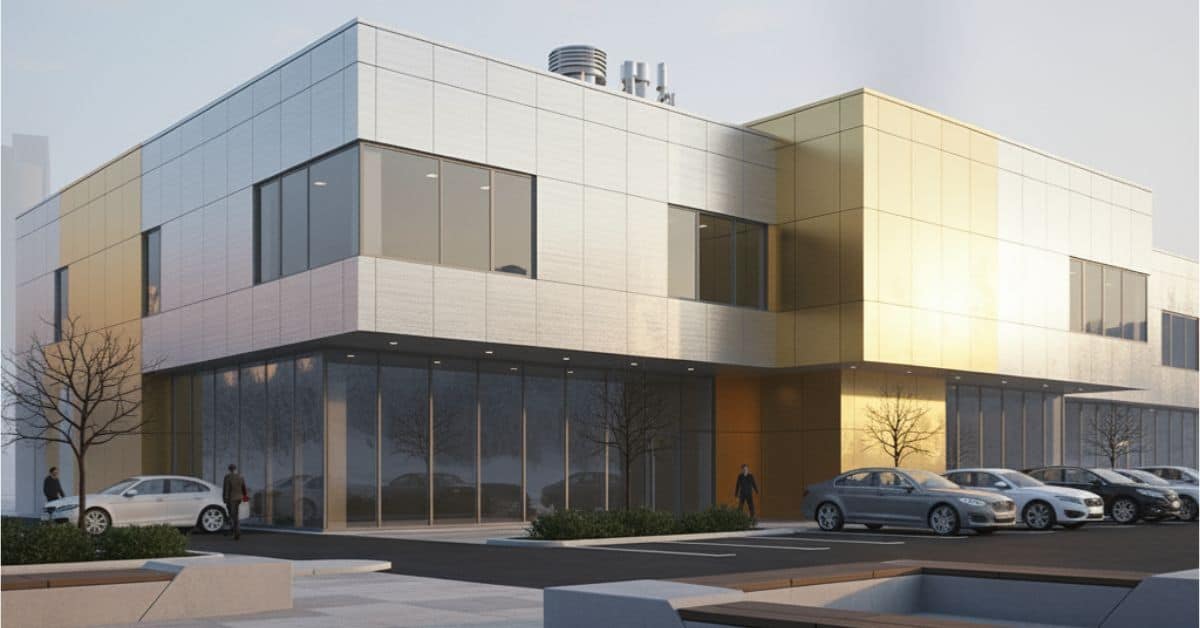
In regions where temperatures dip well below freezing, building materials face unique challenges. From thermal contraction to condensation and impact stress from snow or ice, structures in cold climates demand materials engineered for durability and stability. Aluminium Composite Panels (ACP) have emerged as a reliable cladding solution for such demanding environments, combining aesthetics with outstanding cold weather performance. As one of India’s leading ACP manufacturers, Aludecor has continually advanced its formulations to ensure exceptional resilience in extreme weather conditions.
From the freezing terrains of Ladakh and Himachal Pradesh to the frosty plains of Kashmir and Sikkim, architects are increasingly turning to ACP panels in cold climates as a dependable solution for both durability and design. These regions, with temperature variations ranging from –20°C in winter to over 25°C in summer, demand façades that can handle expansion, contraction, and moisture exposure without compromising aesthetics or performance.
ACP Panels Cold Climates: What You Need to Know
When selecting façade materials for buildings in cold regions, architects must consider how materials respond to thermal cycles. Materials expand when heated and contract when cooled, and this movement can cause cracking, deformation, or joint failure. However, ACP panels cold climates are designed to withstand this stress effectively. Their aluminium layers and stable thermoplastic core absorb movement while retaining their visual appeal. This makes ACP cold weather resistance ideal for mountainous regions and northern climates where temperatures swing drastically between day and night.
How Low Temperatures Affect Building Materials
Cold weather poses distinct structural challenges. Concrete can lose elasticity, wood may warp or absorb moisture, and certain plastics become brittle. Even glass can experience edge cracking under thermal shock. In contrast, metal-based materials such as ACP exhibit far greater stability. Aludecor’s aluminium composite panels undergo rigorous testing (unmatched 205 tests make it the most tested and trusted ACP brand) to ensure long-term adhesion and flexibility, even after multiple freeze–thaw cycles. This ensures that façade systems remain intact through years of harsh weather exposure.
Do ACP panels expand or contract in cold climates?
Yes, like all materials, ACPs do expand and contract, but their movement is minimal and predictable. The aluminium skin and thermoplastic core expand uniformly, reducing the risk of stress on fasteners or joints. This thermal stability is one reason why ACP cold weather resistance is superior to many alternative façade options.
How ACP Panels in Cold Weather Enhance Cold Climate Performance
The multi-layered composition of ACP allows it to perform reliably across diverse climatic zones. In cold conditions, its aluminium surface resists brittleness, while the polyethylene or fire-retardant core maintains elasticity. This combination ensures mechanical stability and prevents micro-fractures that often appear in solid metallic panels. Aludecor’s formulations undergo accelerated weathering tests that replicate long winters, validating their ability to endure repeated frost cycles without compromising adhesion or surface finish.
From a technical standpoint, ACP cold climate performance offers an optimal thermal conductivity (k-value) that is significantly lower than solid aluminium or steel panels. This helps reduce heat transfer, minimizing thermal bridging — a crucial factor for energy-efficient envelope design. This property also contributes to its long-term dimensional stability, a major advantage over heavier materials like concrete or stone that can crack under cold stress.
Durability and Impact Resistance in Snow and Ice
Heavy snow accumulation, sleet, or hail can impact building surfaces significantly. ACP panels in cold weather perform exceptionally under such conditions due to their composite sandwich structure. The dual aluminium skins absorb impact energy while the flexible core disperses it, preventing dents or cracks. This combination ensures façade longevity even in regions prone to storms. Aludecor’s coating systems also provide superior resistance to abrasion and salt spray, an added advantage for high-altitude cities exposed to ice-melt salts.
Is ACP cold weather resistance suitable for sub-zero temperatures?
Yes, modern ACPs are engineered to perform efficiently even below freezing. High-quality bonding resins maintain adhesion between the aluminium and the core, ensuring that panels don’t delaminate or lose shape. This resilience makes ACP panels in cold weather one of the most preferred cladding choices for cold climate projects in India and abroad.
Also Read : Know Why Ar. Amin Nayyar Chose Aludecor ACP Sheets for Kashmir University
Thermal Efficiency: Keeping Interiors Warm with ACP
Beyond surface durability, ACP façades contribute to thermal comfort. When paired with insulation materials, they minimize heat loss from interiors, maintaining steady indoor temperatures. In regions with long winters, this translates into significant energy savings. Moreover, acp cold climate performance includes its ability to reduce condensation buildup, preventing moisture-related deterioration in structural walls.
In the context of sustainable architecture, ACP also supports green building initiatives such as IGBC and LEED certification. By enabling better insulation and air-tight façades, it helps reduce heating energy consumption. This makes ACP a viable choice for architects seeking to balance performance, sustainability, and design versatility in challenging climatic zones.
Also Read : How Weather Conditions Affect The Selection of ACP Sheets
Maintenance Tips for ACP in Cold Weather
Routine maintenance ensures that façade performance remains optimal. Architects and maintenance teams should inspect sealants, expansion joints, and panel fixings after every winter. Gentle cleaning using neutral pH cleaners helps retain gloss without affecting protective coatings. Aludecor recommends periodic inspection especially in snow-heavy regions to ensure long-term efficiency and aesthetics.
Can ACPs help improve building insulation in cold climates?
Absolutely. When used in ventilated façade systems, ACP cold climate performance can trap an insulating layer of air between the exterior and the main wall. This improves the building’s overall energy performance. Combined with double glazing and insulated walls, ACP cladding enhances both comfort and energy savings.
Conclusion
ACP panels cold climates are redefining façade solutions for architecture in challenging environments. Their flexibility, thermal efficiency, and weather resistance make them indispensable to sustainable construction. From mountain resorts to northern industrial zones, Aludecor’s high-performance panels demonstrate unmatched reliability. With decades of expertise and continuous innovation in ACP cold weather resistance, Aludecor, as India’s most tested and trusted ACP brand, stands at the forefront of designing materials that perform where others fail — proving that beauty and endurance can coexist, even under the harshest conditions.
As cities across India and the world face unpredictable climatic shifts, ACP has proven its worth not just in freezing regions but also in high-heat zones. Its adaptability, lightweight structure, and design flexibility make it a future-ready solution for architects seeking both sustainability and longevity in façade design.
FAQs
Can ACP panels crack in extreme cold?
High-quality ACPs are designed to endure low temperatures without cracking. Aludecor’s panels undergo flexibility and impact resistance testing to ensure they withstand freeze-thaw cycles.
Does cold weather affect ACP’s colour or finish?
No. Aludecor’s PVDF coatings provide excellent UV and temperature stability, ensuring that colour and gloss remain consistent even after prolonged cold exposure.
Are special ACP coatings needed for snowy climates?
While standard ACP coatings perform well, Aludecor offers enhanced formulations with superior hydrophobic properties for extreme snowy regions.
How do ACPs compare to other cladding materials in low temperatures?
Compared to materials like stone or concrete, ACPs are lighter, more flexible, and less prone to thermal cracking, making them a superior choice for cold environments.


