Architecture today is shaped by an evolving dialogue between creativity, engineering, and material intelligence. As façades increasingly function as expressive, interactive layers rather than static barriers, designers are exploring surfaces that adapt, respond, and visually transform. Modern exteriors – whether on homes or offices – draw from global trends such as parametric skins, kinetic façades, multi-textured elevations, and nature-inspired surface modelling.
In this landscape of innovation, ACP cladding design has become central to contemporary architecture. Its ability to be folded, perforated, routed, curved, or patterned makes it suitable for everything from sculptural parametric forms to climate-responsive façade geometry. Lightweight, durable, and finish-rich, ACP enables the creation of complex visual expressions that remain feasible and structurally efficient.
Across India, architects increasingly rely on ACP systems to achieve this intersection of form and function. Whether the goal is to design bold geometric elevations or fluid organic surfaces, ACP supports diverse architectural ambitions. As one of India’s most tested and trusted ACP manufacturers, Aludecor has contributed significantly to this shift, engineering high-performance cladding materials tailored to monsoon, heat, pollution, and UV-intensive conditions. Their extensive finish library, ranging from metallics to stone to sand-feel surfaces – continues to shape residential and commercial façades across the country.
Modern ACP Façade Trends: Parametric, Kinetic & Smart Surface Designs
The rise of computational design tools has introduced new dimensions to façade architecture. ACP cladding design lends itself remarkably well to these emerging styles due to its flexibility and fabrication ease.
Parametric ACP Structures
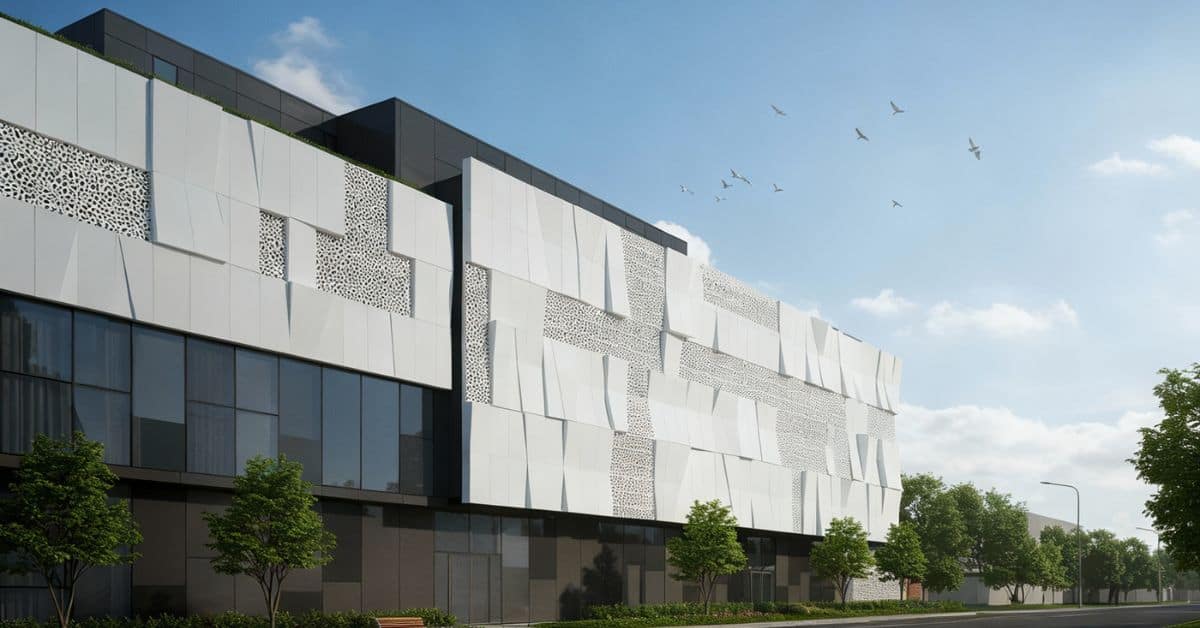
Parametric design, driven by algorithmic geometry, allows architects to generate fluid, rhythmic surface patterns. ACP sheets can be routed, folded, curved, and panelised into complex patterns, making them ideal for:
- organic wave-like façades,
- perforated biomorphic screens,
- tessellated 3D surfaces, and
- layered depth façades for light-shadow interplay.
These forms, once difficult with stone or concrete, are now achievable with ACP due to its light weight and design responsiveness.
Kinetic ACP Façades
Kinetic façade surfaces that move or visually shift with wind, light, or user input – are gaining global attention. ACP panels can be engineered into small, lightweight flaps or fins that respond to natural airflow, creating dynamic shimmering surfaces.
Applications include:
- privacy-adaptive office screens,
- wind-responsive exterior panels,
- shading fins that reduce heat gain,
- motion-based artistic façades.
These systems enhance building performance while doubling as visual landmarks.
Integrated Lighting & Media-Ready ACP Skins
Modern offices and public buildings increasingly incorporate backlit ACP perforations or LED-embedded joints. ACP’s dimension stability makes it ideal for:
- luminous branding walls,
- perforated night-glow elevations,
- media façade frameworks.
Nature-Inspired Skin Patterning
From stone-like organic textures to tree-bark vertical grains, to sand to concrete, ACP supports biomimetic patterns that merge design with context.
Top ACP Cladding Designs for Modern Home Exteriors
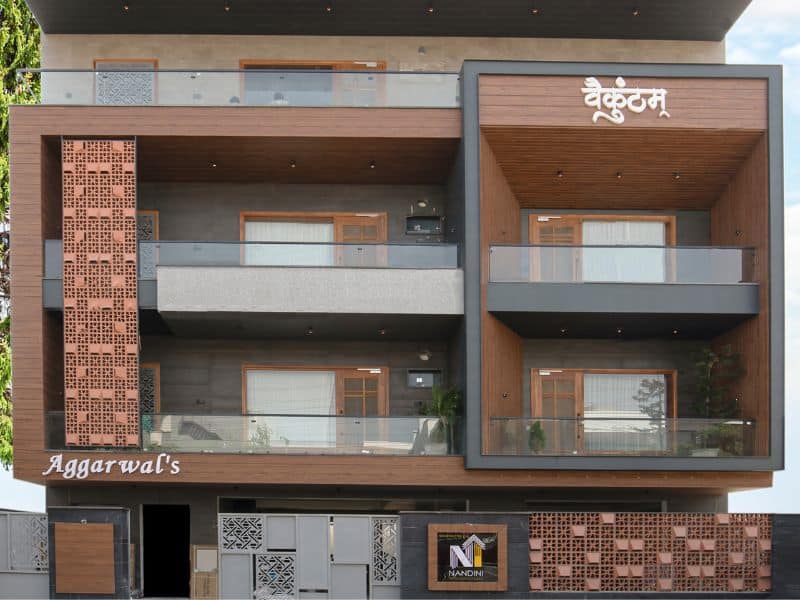
Indian residential architecture has evolved rapidly, drawing inspiration from global minimalism, nature‑integrated design, and texture‑rich surfaces. ACP cladding design options have expanded significantly in response to this demand, offering homeowners a blend of sophistication, durability, and affordability. Contemporary villas frequently use acp sheet design for home exterior concepts such as mixed-material layouts and layered façades.
Below are some of the most widely adopted ACP styles in modern home exteriors:
• Sleek Minimalist Panels: These panels support clean lines and uncluttered geometries, ideal for contemporary villas. Their uniform surface creates a refined modern look.
• Wood‑Look Vertical Slats: Timber‑inspired acp sheet design for home exterior finishes add organic warmth without the maintenance challenges of natural wood.
• Textured sand & Concrete Surfaces: For homes seeking a rustic or natural aesthetic, sand, concrete‑like ACPs deliver a premium look with lighter weight and higher durability.
• Earthy warm & Raw – rustic Finishes: Matte, earthy and rugged textures suit modern Indian homes aiming for understated elegance and environmental harmony.
• Metallic Accent Banding: Metallic ACP trims around windows, balconies, and façade edges elevate visual appeal while reinforcing structural lines.
These innovations allow home designers to layer textures, experiment with contrast, and create façades that remain visually consistent for years. ACP cladding design further One of the strongest advantages of ACP is its low-maintenance nature. The material resists dust settling, water staining, and surface fading, making it suitable for polluted or coastal zones. Routine cleaning with mild detergent restores sheen within minutes, and damaged panels can be replaced modularly without disturbing the entire façade. This makes ACP a practical long-life cladding solution for both homes and commercial buildings.
Also Read : 12 Creative ACP Sheet Home Design Ideas for Stylish Spaces
Stylish ACP Cladding Ideas for Office Buildings

Office architecture places high emphasis on brand identity, operational efficiency, and long‑term maintenance performance. Here, ACP stands out by providing design flexibility and structural reliability. Through advanced acp paneling designs, corporate buildings achieve both aesthetic impact and functional enhancement.
Some of the most popular ACP exterior styles for office buildings include:
• Bold Colour Blocks: Used to strengthen visual identity, these panels incorporate company colours or contrasting tones.
• Perforated ACP Screens: Laser‑cut ACP surfaces provide privacy control, solar shading, and unique visual patterns that enhance façade depth.
• 3D Routed Panels: Routed surfaces add dynamic shadow play, making the building visually engaging from multiple vantage points.
• Hybrid Material Elevations: Combining ACP with glass, stone, or steel results in high‑impact façades used in IT parks, public buildings, and corporate towers.
What makes ACP cladding ideal for modern home and office exteriors?
ACP systems are lightweight, weather‑resistant, and available in many textures. They enhance façade durability while enabling customised architectural expression.
Modern offices, government structures, and institutional buildings continue adopting ACP for its consistent finish, lightweight properties, and climatic endurance. With PVDF coatings and engineered cores, ACP maintains performance across monsoon, humidity, dust, and UV exposure.
How does ACP perform against dust, humidity, and heat?
ACP coated with PVDF or FEVE resists fading, moisture, and corrosion, making it ideal for tropical and urban Indian climates.
Also Read : Commercial Building Elevation Ideas with ACP Sheets
How to Choose the Right ACP Finish & Colour
Choosing the right ACP finish ensures harmony between architectural concept, environmental context, and long‑term performance. Architects typically evaluate factors like texture, reflectivity, maintenance demands, and compatibility with neighbouring structures. These texture-rich solutions help elevate acp paneling designs by adding tactile depth and contrast.
Factors to consider include:
– Matte Finishes: Provide a sophisticated, glare‑free appearance perfect for subtle modern façades.
– Metallic Surfaces: Suited for commercial and high‑rise projects; they deliver a polished corporate look.
– Textured & Mineral Finishes: Ideal for clients seeking stone, sand or concrete‑like aesthetics without added structural load.
– Timber Finishes: Popular in acp sheet design for home exterior concepts, these surfaces add warmth without attracting termites or moisture.
– High‑Gloss Panels: Best used sparingly for highlights or accent walls.
Aludecor’s curated finish collections combine engineered coatings, colour stability, and environmental performance to ensure that façades retain their visual character over time.
Across modern homes, offices, and public buildings, ACP cladding design offers unmatched creative scope and reliable façade performance. Its adaptability, range of finishes, and strength make it a preferred solution in contemporary architecture. As India’s most tested and trusted ACP – Aludecor continues empowering designers with materials that merge engineering precision with design ambition. With advanced coating systems and proven weather endurance, Aludecor’s ACP collections set new benchmarks for exterior aesthetics across India.
FAQs
What are the most popular ACP finishes for modern exteriors?
Matte, metallic, textured, and wood‑look finishes are widely used across residential and corporate exteriors.
Can ACP cladding withstand extreme weather conditions?
Yes. High‑quality ACP is engineered to resist moisture, UV radiation, corrosion, and thermal expansion.
How long does ACP cladding last on façades?
ACP façades typically last more than 20 years with proper installation and minimal maintenance.
Is ACP suitable for both small homes and large office buildings?
Yes. ACP’s lightweight, durable structure adapts well to both compact and large‑scale architectural applications.
📞 Call Aludecor’s toll-free support at 1800-102-0407
🌐 For more details and expert advice visit www.aludecor.com/enquiry