

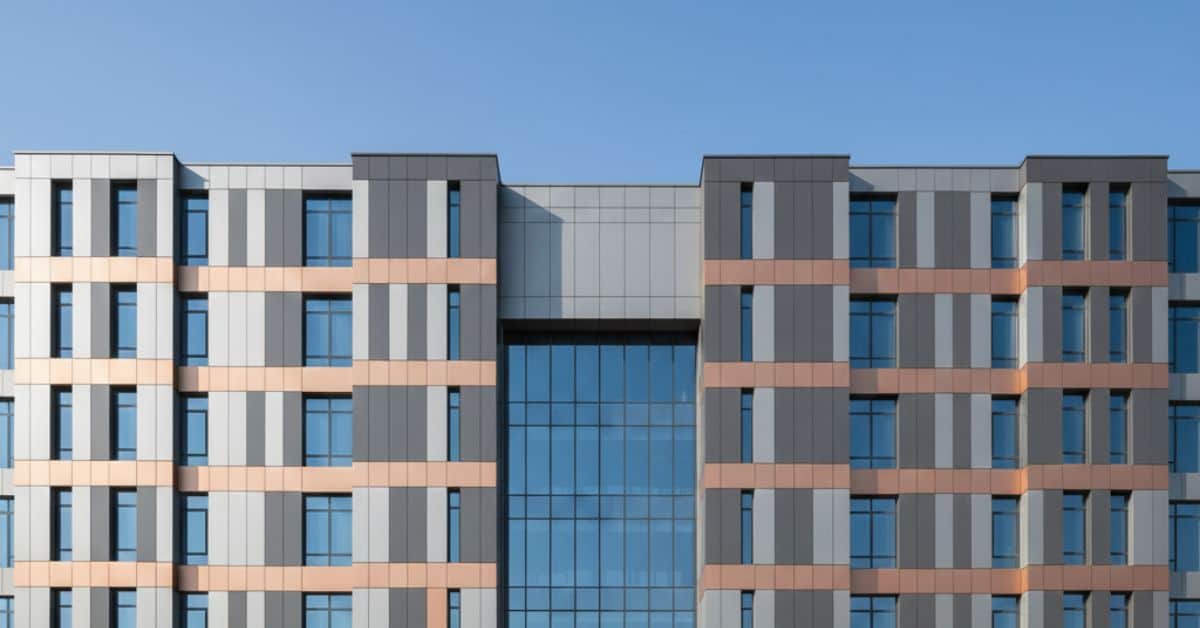
Modern façades demand precision, longevity, and aesthetic consistency. In contemporary architecture, the success of any cladding system relies not only on the quality of the material but also on the discipline of the installation process. Aluminium Composite Panels (ACPs), known for their versatility and lightweight strength, have become a preferred choice across commercial, residential, and institutional structures in India. However, the real impact of the material is realised only when a professional ACP sheet installation process is followed.
As one of India’s most tested and trusted ACP manufacturers, Aludecor has consistently emphasised application quality, correct fixing methods, and the use of durable accessories. Following precise installation steps ensures structural reliability, enhances weather protection, and maintains façade aesthetics over time. This comprehensive guide provides architects, builders, and government project teams with a detailed look into achieving a flawless finish.
Understanding ACP Cladding and Project Preparation
A professional installation begins long before the first panel is fixed. ACP consists of two aluminium sheets bonded to a mineral-filled or FR-grade core. Its rigidity, workability, and resistance to environmental stress make it suitable for varied façade expressions.
Before starting an acp cladding installation, project preparation includes:
- Drawing review: Evaluating facade elevations, panel layouts, system details, and joint spacing.
- Substrate verification: Ensuring the wall is plumb, structurally sound, and free of cracks.
- Material inspection: Panels should be stored flat, in dry conditions, and protected from impact.
- Measurement accuracy: Installation areas must be measured with thermal expansion allowances.
- System planning: Selection of tray systems, exposed-fastener systems, or ventilated substructures.
A professional aluminium composite panel installation always begins with a thorough assessment of site conditions to avoid alignment issues or long-term façade deformation.
What is the ideal thickness for ACP cladding?
Most exterior applications use 3 mm or 4 mm ACP, with FR-grade cores preferred for fire safety. The thickness depends on wind load, building height, and facade system type.
Step-by-Step Application for a Professional Finish
1.Surface Inspection and Site Marking
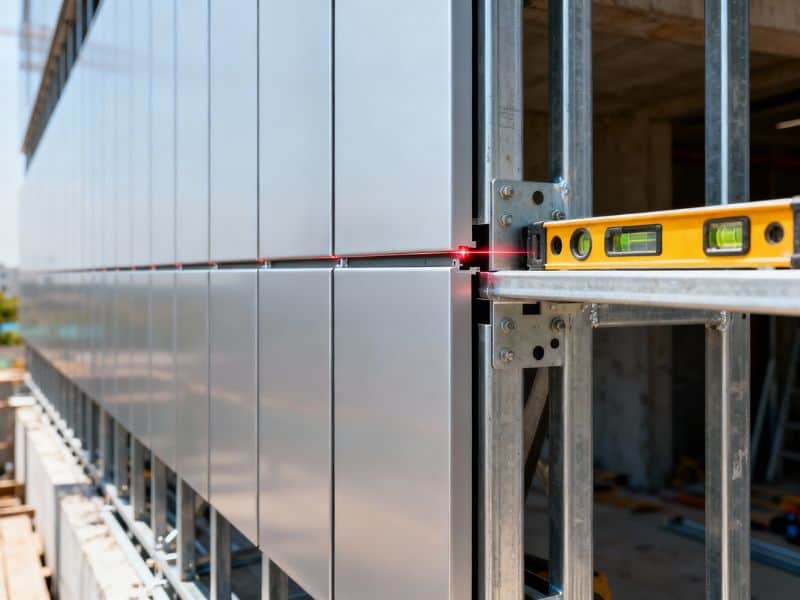
Every ACP sheet installation begins with identifying structural irregularities. Installers check for moisture patches, weak plaster, or uneven surfaces. Laser line markers are used to establish reference grid lines, ensuring all subsequent steps follow a consistent vertical and horizontal alignment.
This step prevents deviations during ACP panel installation, especially in high-rise structures where minor misalignments are visually amplified.
2. Substructure Preparation
The substructure forms the backbone of any façade. Typically made from aluminium or galvanised steel, it transfers wind load, dead load, and temperature-induced expansion safely to the building frame.
Steps include:
- Installing vertical and horizontal sections (usually 1–1.5 mm thick aluminium profiles).
- Ensuring corrosion-resistant profiles with proper anchoring.
- Providing ventilation gaps behind the panels.
- Leaving precise thermal expansion allowances.
In Aludecor’s recommended practice guides, the substructure is calibrated using laser tools to ensure that the façade remains perfectly straight over large elevations.
Why is a ventilated cavity important in ACP facades?
A continuous exhaust cavity prevents moisture accumulation, reduces thermal stress, and improves energy efficiency by promoting chimney effect ventilation.
3. Fixing of Brackets and Anchor Fasteners
Brackets connect the building wall to the façade grid. The durability of ACP cladding installation largely depends on the quality of these fixings.
Best practices:
- Use aluminium brackets for corrosion resistance.
- Ensure full torque for anchor fasteners.
- Apply isolators to prevent bimetallic corrosion.
- Verify load distribution through pull-out tests.
Incorrect bracket spacing is a common reason for panel misalignment and rattling during strong winds.
4. ACP Panel Fabrication
Fabrication is carried out in a controlled workshop environment using routers, circular saws, and CNC equipment. Precise fabrication ensures consistent joinery and clean panel edges.
Fabrication steps include:
- Panel cutting
- Routing for tray formation((minimum 25 mm fold)
- Folding of the return legs
- Punching of holes
- Labelling panels for sequence installation
Throughout the process, protective film must remain intact. A well-executed fabrication stage ensures the ACP sheet fitting proceeds smoothly on site.

5. Dry Installation Trial
Before fixing panels permanently, installers perform a dry mock installation. This ensures correct fitting, reveals any fabrication errors, and confirms panel spacing.
This step is especially critical when executing large-scale aluminium composite panel installation such as corporate campuses, airports, or government buildings.
6. Panel Fixing
Panels are fixed using cleats, screws, or slide-on pressure plates depending on the system.
Important considerations:
- Maintain uniform joint gaps (typically 10–12 mm).
- Ensure precise vertical alignment across panels.
- Avoid overtightening screws to prevent buckling.
- Use weather-resistant accessories for outdoor installations.
Professional ACP panel installation delivers a seamless façade by balancing panel tension, joint spacing, and alignment.
7. Joint Sealing and Weatherproofing
Joint sealing is essential for preventing water ingress, dust accumulation, and air leakage.
Key steps:
- Use a high-quality neutral-cure silicone sealant.
- Apply backer rods to control sealant depth.
- Clean joint edges thoroughly before sealing.
- Maintain consistent sealant bead thickness.
For outdoor ACP systems, architects widely prefer neutral-cure silicone for its UV stability and strong adhesion. Aludecor’s technical guides recommend sealants specially formulated for façade weatherproofing.
8. Protective Film Removal
Once all panels are fixed and sealed, protective films are removed. This must be done shortly after installation to prevent film adhesion under sunlight.
9. Final Inspection and Quality Check
A professional finish requires:
- Checking verticals and horizontals again
- Inspecting sealant consistency
- Reviewing joint alignment
- Ensuring there are no mounting dents or scratches
- Verifying water drainage and ventilation gaps
This last step guarantees longevity and reduces post-installation repair requirements.
Common Mistakes to Avoid in ACP Sheet Installation
- Improper Thermal Gap Provision
ACP expands and contracts with temperature. Lack of expansion allowance leads to warping.
- Incorrect Substructure Levelling
An unlevel grid causes misaligned panels and visual distortion.
- Removing Protective Film Too Early
Premature removal results in scratches during acp sheet fitting.
- Ignoring Sealant Quality
Low-grade sealants deteriorate quickly in India’s climate.
Skipping dimensional rechecks during ACP sheet fitting can lead to visible misalignment across large elevations
Also Read : Top 5 ACP Installation Mistakes to Avoid for Long-Lasting Cladding
Choosing Materials and Tools for Professional Installation
A professional ACP cladding installation relies on the right tools:
- CNC and routing machines
- Rivet guns
- Drilling machine
- Torque-controlled screwdrivers
- Non-bleeding silicone sealants
- Blade thickness of 10mm or 12mm
- Laser line markers
- Safety gears: Gloves, helmets, construction boots, safety rope, safety goggles and all necessary safety pieces of equipment are required.
For exterior façades, a high-quality neutral-cure silicone sealant is essential. As highlighted in Aludecor’s application guidelines, the sealant must offer weatherproofing, UV resistance, and long-term flexibility.
Conclusion
A systematic and well-executed ACP sheet installation ensures finish consistency, structural integrity, and long-term façade performance. Each stage, from marking to substructure setting, fabrication, installation, and sealing, contributes to the façade’s durability and visual refinement. As India’s most tested and trusted ACP, Aludecor continues to support installers and specifiers with technically robust ACP systems, weatherproof sealants, and best-practice installation methodologies that align with global façade standards.
This step-by-step approach guarantees a professional, durable, and visually refined ACP cladding system, significantly reducing future maintenance needs while maximising both the aesthetic and performance benefits of the building envelope.
FAQs
- What type of sealant is best for outdoor ACP installations?
A high-quality neutral-cure silicone sealant formulated for façade weatherproofing is recommended for outdoor ACP applications due to its UV resistance and long-term elasticity.
- What tools are essential for a quality ACP installation?
Tools include CNC routers, rivet guns, laser levels, torque-controlled screwdrivers, Aluminium fasteners, and high-performance silicone sealants.
- How often should ACP façades be inspected?
Annual inspections are ideal. Critical checks include joint sealant condition, substructure stability, panel integrity, and cleaning for dust accumulation.
- Are ACP panels suitable for high-rise building exteriors?
Yes, when properly installed using a ventilated façade system with structural-grade sub framing.
📞 Call Aludecor’s toll-free support at 1800-102-0407
🌐 For more details and expert advice visit www.aludecor.com/enquiry