
Ventilation products rarely get the spotlight. People talk about facades, glazing, cladding textures, parametric skins. But Aluminium Louvers quietly do a job that is both practical and architectural. And when done right, they don’t just “do the job” – they elevate the entire elevation.
In modern construction, whether we’re discussing a residential bungalow in Pune or a corporate tower in Gurugram, airflow management and solar shading are no longer optional. They are performance parameters. You’re working within thermal comfort standards, daylight factors, air change requirements, and energy compliance frameworks. And somewhere between all that, you’re expected to deliver visual harmony too. That’s where Aluminium Louvers come in.
We’ve seen architects increasingly look for solutions that support balancing aesthetics in building design without compromising engineering intent. And frankly, that’s exactly what louvers were meant to do.
Why Aluminium Louvers Are a Preferred Choice
Aluminium Louvers offer an exceptional strength to weight ratio. Aluminium alloys used in architectural applications typically have tensile strengths ranging between 150–300 MPa depending on grade and temper. That’s significant for a material that remains lightweight and corrosion resistant.
And corrosion resistance is not a small thing in Indian climatic conditions. Coastal zones, industrial belts, heavy rainfall regions. Powder-coated aluminium systems, when applied as per Qualicoat standards, can withstand accelerated weathering tests like 1000+ hours in salt spray chambers under ASTM B117 protocols.
Aludecor is the first Indian manufacturer to introduce roller coated metal louvers in multiple degrees under the brand name Alubreeze. Powder-free roller coating ensures uniform finish and weather resistance.
But here’s the real reason why architects prefer louvers. Flexibility.
Functional aluminium louvers for architects allow control over blade angle, pitch spacing, air permeability, and shading coefficient. A well-designed louver system can reduce direct solar heat gain while maintaining cross ventilation. That’s passive design done properly. Noted façade consultant Vicky L Vora says, “The ability to offer deeper louver profiles and longer fin spans gives Aludecor’s metal louvers a clear design and performance advantage over the extrusion-based ones.”
In short, Aluminium Louvers are not decorative add-ons. They’re engineered architectural components.
Striking the Balance Between Ventilation and Aesthetics
Ventilation needs breathing space. Design needs discipline. If the spacing is too tight, airflow suffers. If it’s too wide, the facade starts losing its visual rhythm.
A well-designed louver system typically delivers around 45% to 60% free area, depending on blade depth and pitch. Adjustable blades can rotate between 0 to 45 degrees, which helps control sunlight while still allowing air to pass through. It’s a subtle calibration, not a random choice. And this is exactly where Aluminium Louvers make sense. The slim extrusion profiles allow clean, minimal lines without compromising ventilation performance. You get structure and softness at the same time.
Functional aluminium louvers for architects are often planned alongside curtain wall systems or ACP facades, not added later. When aligned properly with the cladding grid, the elevation feels composed. And here’s something many people overlook. Overdesigning louvers ruins them. The strength lies in restraint. Balanced blade depth, natural shadow play, finishes that quietly complement the facade. That’s truly balancing aesthetics in building design.
Design Options: Colours, Shapes, and Sizes of Aluminium Louvers
Modern Aluminium Louvers are available in multiple blade profiles. Aerofoil shapes for reduced wind resistance. Rectangular box sections for sharper geometry. Z-shaped blades for enhanced rain protection. Blade depths typically range from 75 mm to 200 mm depending on application. Structural spans can vary based on wind load calculations as per IS 875 Part 3 for wind loads in India.
And colours. Powder coating offers RAL shade flexibility. Anodised finishes give metallic consistency with oxide layer thickness around 15-25 microns. However, roller coating delivers uniform film thickness, superior adhesion, and long-term colour stability through a controlled, continuous application process.
Functional aluminium louvers for architects become particularly interesting when colour is used strategically. Dark shades absorb more heat but create strong shadow contrast. Light tones reflect solar radiation and visually enlarge surfaces. Balancing aesthetics in building design often comes down to finish selection. A matte charcoal may align with ACP facades. A champagne anodised tone may work better with glazing systems.
We’ve seen that the industry combines horizontal louvers with vertical fin systems to create layered facades. And honestly, when proportioned correctly, the result is visually striking.
Also Read : How to Maintain Your ACP Louvers for Long-Lasting Performance
Practical Benefits: Durability, Cost Effectiveness, and Low Maintenance
Performance matters. Especially long term. Aluminium Louvers do not warp like timber. They don’t rust like untreated steel. And unlike composite alternatives, they maintain dimensional stability under temperature fluctuations.
Aluminium has a coefficient of thermal expansion of approximately 23 x 10⁻⁶ /°C. That means predictable expansion behaviour. With proper installation tolerances, structural integrity remains intact. Maintenance is simple. Periodic cleaning with mild detergent and water. No repainting cycles every two years. No termite treatment. No surface delamination issues.
Cost effectiveness comes not only from initial procurement but lifecycle value. When you consider 20–25 year durability with minimal intervention, Aluminium Louvers often outperform many facade shading systems economically. And yes, functional aluminium louvers for architects reduce HVAC loads indirectly by cutting solar gain. Lower heat ingress means reduced cooling demand. That translates into operational savings.
That’s what makes balancing aesthetics in building design financially sensible too. Beauty that performs. Not beauty that costs you later.
Applications in Residential Spaces
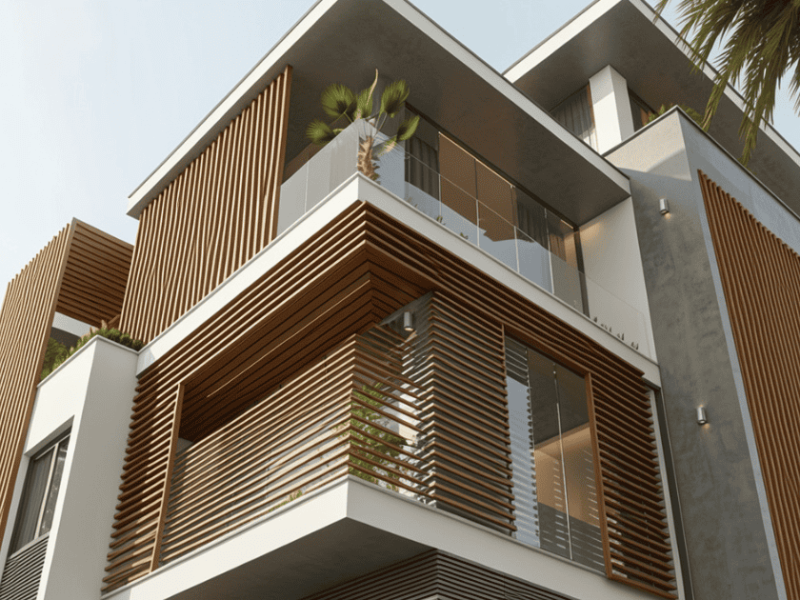
In residential architecture, privacy and ventilation are both sensitive topics. Aluminium Louvers are widely used in balcony enclosures, service duct covers, terrace screens, and car parking ventilation zones. Adjustable systems allow homeowners to control airflow and visibility.
In hot climates, properly oriented louvers reduce glare and harsh sunlight penetration. This improves indoor comfort without heavy reliance on air conditioning. We’ve noticed an increasing demand for decorative facade screens in villas and gated communities. Here, functional aluminium louvers for architects are customised to match the ACP facade colours or window frame finishes.
Balancing aesthetics in building design at a residential level is more emotional. The homeowner wants beauty. But they also want durability. And frankly, Aluminium Louvers deliver both.
Also Read : Interior Wall Panel Trends: Why More Designers Are Choosing Aluminium Louvers
Applications in Commercial Projects
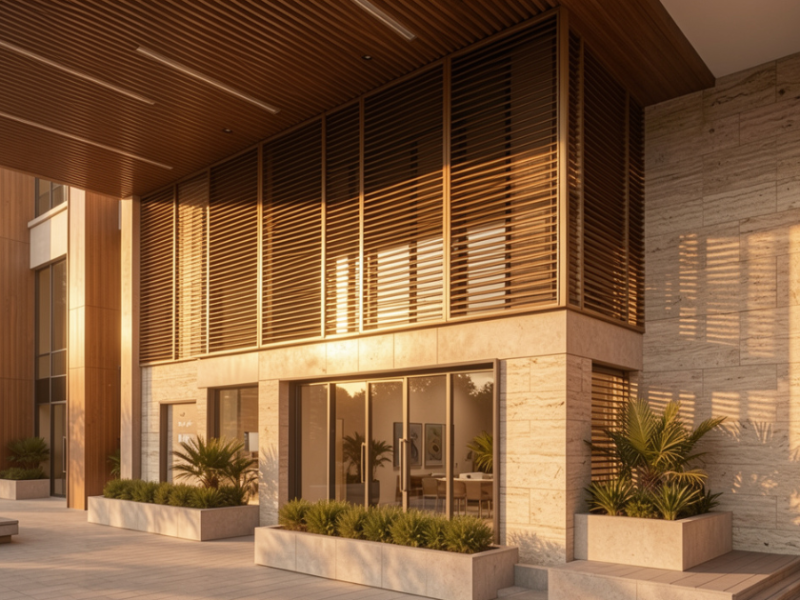
Commercial buildings operate differently. Compliance, ventilation rates, energy efficiency targets. Mechanical rooms require constant airflow. Parking basements must meet ventilation norms often specified in NBC guidelines. Data centres demand controlled shading without airflow compromise.
In such projects, Aluminium Louvers act as functional facade elements. They conceal services while maintaining air intake and exhaust performance. Functional aluminium louvers for architects are often engineered to achieve specific airflow rates measured in cubic metres per hour. Blade spacing and system depth are calculated accordingly. And visually, large format louver systems create dynamic facade textures. When integrated with ACP cladding grids, they create a rhythmic architectural language.
Balancing aesthetics in building design becomes more technical here. The facade must express brand identity while complying with environmental performance standards. From IT parks to hospitals to retail complexes, Aluminium Louvers remain a dependable solution.
Tips for Builders to Maximise Performance of Aluminium Louvers
Now let’s talk about practical advice.
- Align louver orientation with prevailing wind direction. That enhances natural ventilation efficiency.
- Consider wind load calculations seriously. High rise buildings experience increased wind pressure. Structural anchoring must comply with IS codes.
- Use proper powder coating thickness. Typically 60–80 microns for exterior durability.
- Ensure drainage channels in rain exposed installations. Z profile blades help deflect water ingress.
- Integrate louvers early in the design stage. Retrofitting disrupts facade geometry and compromises balancing aesthetics in building design.
Functional aluminium louvers for architects work best when they are treated as design elements from day one. Not as an afterthought during mechanical coordination.
Conclusion
When you step back and observe contemporary architecture, ventilation is no longer hidden. It is expressed. Aluminium Louvers represent that intersection of engineering logic and architectural intent. They regulate airflow. They manage sunlight. They enhance the facade and more importantly, they support balancing aesthetics in building design without forcing a compromise.
In our experience, when architects choose the right profile, finish, and installation detail, Aluminium Louvers become silent performers. Reliable. Elegant. Efficient. Sometimes the simplest components make the biggest difference.
FAQs
- What makes aluminium louvers better than other options?
We believe Aluminium Louvers outperform alternatives because they combine durability, non combustibility, and design flexibility in one system. Aluminium does not rust, warp, or decay. When powder coated to architectural standards, it offers long term resistance against UV exposure and corrosion. As compared to timber, aluminium requires minimal maintenance. Compared to steel, it is lighter and more corrosion resistant. We design our louver systems to ensure optimal airflow while maintaining structural stability under wind loads as per relevant IS standards. In practical terms, this means lower lifecycle cost and consistent performance over decades.
- Are aluminium louvers only for exterior use?
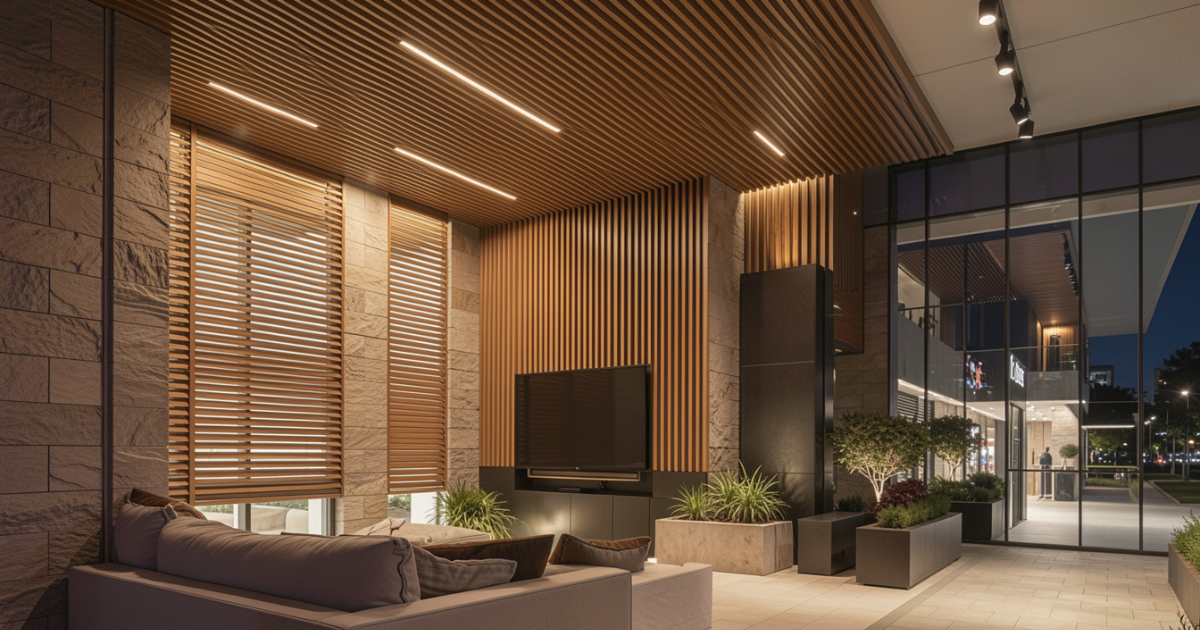
Not at all. While Aluminium Louvers are commonly used on facades for ventilation and shading, we also see applications in interior partitions, plant rooms, service corridors, and decorative ceiling elements. We often customize functional aluminium louvers for architects working on interior atriums or enclosed parking zones where airflow management is required without visual exposure of mechanical systems. Their versatility allows seamless integration in both external and internal architectural environments.
- How can louvers improve both design and functionality?
This is where the magic happens. We design Aluminium Louvers to manage airflow, reduce solar heat gain, and provide privacy. At the same time, blade profile, spacing rhythm, and colour selection influence the building’s visual character. By carefully calibrating blade angles and finish selection, we achieve balancing aesthetics in building design while maintaining ventilation efficiency. When integrated with ACP facades, glazing systems, or structural grids, louvers become part of the architectural story. Not just an accessory. And that’s really the point. Performance and beauty don’t have to compete. They can work together.