

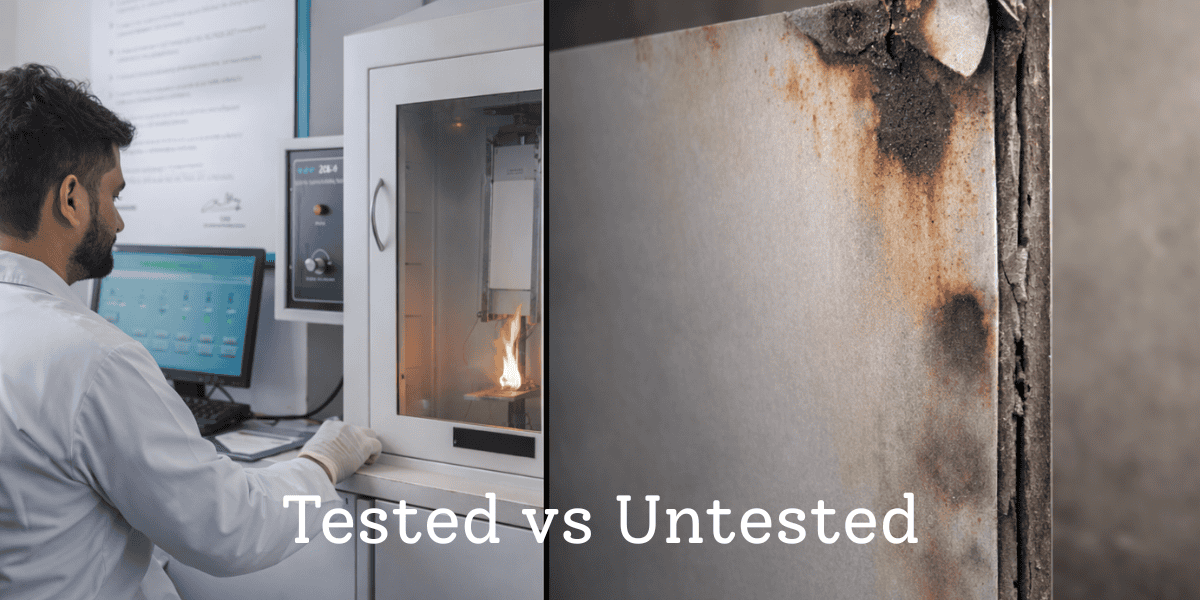
Contemporary construction practices depend on materials that demonstrate proven reliability, strong safety credentials, and long-term performance. In India, where climatic conditions range from intense UV exposure to heavy monsoons and high humidity, the quality of façade materials directly influences building safety and maintenance costs. Aluminium Composite Panels (ACP) are among the most widely used façade materials today, yet not all ACPs offer the same level of protection. This is where the difference between Tested ACP Panels and untested ones becomes crucial.
As India’s most tested and trusted ACP, Aludecor has long advocated for testing transparency and performance verification. Their manufacturing process – supported by 205+ mechanical, chemical, and durability tests, helps architects and project owners understand what certified safety and quality truly mean. This article breaks down the hidden differences between Tested ACP Panels and untested alternatives, highlighting why proper certification is essential for modern buildings.
What “Tested ACP Panels” Actually Mean: An Overview of Performance Standards
A Tested ACP Panel is one that has undergone third-party evaluation, certification, and rigorous laboratory verification. These tests measure structural strength, fire performance, coating durability, bond integrity, weather resistance, and long-term performance under real-world conditions.
Many users still look up for simple clarifications such as acp panel full form (Aluminium Composite Panel), but the real priority lies in evaluating the certification behind each panel.
Tested ACP Panels typically undergo:
- Fire safety tests (EN 13501-1, ASTM, ISO)
- Bond strength tests
- Mechanical tests like peel strength, tensile strength, impact resistance
- Durability tests, including QUV (UV accelerated weathering), humidity, salt spray, and water stripe tests
- Coating performance tests for chalking, gloss retention, and colour stability
In contrast, test ACP panel practices common in low-cost manufacturing include basic in-house checks without certification, witnessed audits, or Factory Production Control (FPC).
What makes an ACP panel “genuine”?
A genuine Tested ACP Panel carries valid, traceable certificates like EN 13501-1 A2/B, ETA (European Technical Assessment), and BIS IS 15961/15982. These documents confirm that the product has passed audited, repeated, and system-level tests – not self-signaled claims.
Also Read : Fire Retardant Material for Modern Architecture

Common Tests ACP Panels Should Pass
To ensure safety and reliability, ACP systems must undergo several mandatory and optional tests. These verify both the aluminium skins and the core material.
Key Tests Include:
- Peel Strength Test
Determines how strongly the aluminium skins bond to the core – one of the most critical performance indicators. - Fire Classification Tests (EN 13501-1: A2-s1,d0 or B-s1,d0)
Measures flame spread, smoke release, and dripping behaviour. - QUV Accelerated Weathering Test
Simulates long-term UV exposure to verify colour stability and chalk resistance. - Salt Spray and Humidity Resistance Tests
Essential for coastal or industrial zones with higher corrosion risks. - Open Sky Test and Water Stripes Test
These long-term outdoor tests verify resistance to water intrusion and coating failure.
(Aludecor executes these tests as part of its 205-step quality control cycle.) - Mechanical Strength Tests
Tensile strength, flexural modulus, and impact resistance.
Also Read : Why Aludecor’s 205 Tests Set the Benchmark for ACP Quality
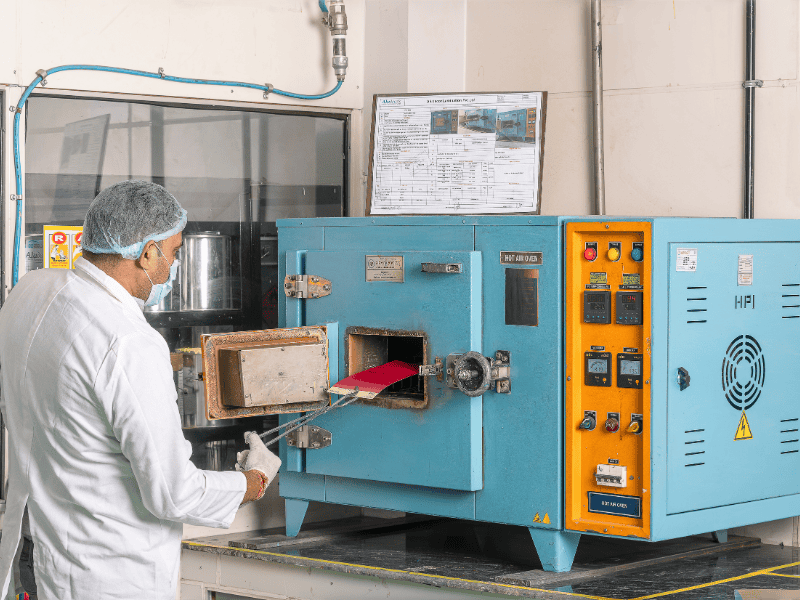
Do all ACPs undergo fire testing?
No. Only certified Tested ACP Panels are fire-tested at accredited labs. Many untested ACPs mimic certification logos without actual reports. Aludecor is the only manufacturing brand in India to have an in-house NABL Accredited lab.
Risks and Failures Associated with Untested ACP Panels
Untested ACPs often hide serious performance gaps that only show up after installation. These defects may not be visible initially but can threaten building safety over time.
Major Risks Include:
- Flame spread during fire events
Non-FR cores in untested ACPs can ignite rapidly, producing toxic smoke. - Delamination and peeling
Poor bond strength cause the aluminium skins to detach from the core. - Weather-induced cracking
Coatings degrade due to UV exposure and moisture penetration. - Warping or expansion issues
Low-quality cores show dimensional instability during temperature cycles. - Insurance rejection & compliance failures
Buildings using untested ACPs may fail audits and face legal penalties.
Case Insight: Many global fire incidents (including Grenfell Tower and regional façade failures) involved untested ACPs with combustible, uncertified cores.
How Tested Panels Improve Structural Safety and Lifespan
Certified Tested ACP Panels offer measurable performance advantages that significantly extend the building’s lifespan.
Key Benefits Include:
- Reliable Fire Performance
A2 or B-class cores restrict flame movement and minimise smoke emission. - Superior Adhesion and Bond Strength
Prevents delamination during thermal expansion or high wind loads. - Weather Durability
Verified through UV, salt spray, humidity, and open-sky tests. - Uniform Quality Through Factory Production Control (FPC)
Ensures every batch meets certified standards.
Aludecor’s 205+ internal tests – including peel strength, coating hardness, and weathering tests – further reinforce the reliability of Tested ACP Panels for long-term façade projects.

The Cost Implications of Choosing Untested ACP Panels
Untested ACPs may appear cheaper but result in high long-term costs.
Hidden Costs Include:
- Frequent repair due to delamination
- Colour fading requiring repainting or replacement
- Structural damage requiring façade overhaul
- Increased energy consumption due to poor insulation
- Safety risks leading to legal and insurance implications
In contrast, Tested ACP Panels reduce lifetime repair needs, offer longer warranties, and improve façade durability – delivering better value over the building’s entire lifecycle.
Are tested ACP panels more expensive?
Slightly, but overall cheaper in the long run. They reduce maintenance, replacement, and safety compliance costs.
How Architects and Builders Can Verify ACP Test Certifications
To ensure authenticity, project teams can follow a simple verification checklist.
Verification Steps:
- Demand full test reports – not just summary sheets
- Check accreditation of the testing lab (NABL)
- Verify EN 13501-1 fire classification (A2-s1,d0 or B-s1,d0)
- Ensure batch-wise traceability and FPC documentation
- Check compliance with:
- ESL
- ECCA
- ISO
- ASTM
- AAMA
- ETA for CE marking
Conclusion
The hidden difference between Tested ACP Panels and untested products lies in the assurance of safety, durability, and compliance. Tested panels undergo stringent fire, mechanical, and weather-resistance evaluations – ensuring performance under Indian climatic challenges. Untested panels, despite appearing similar, often compromise core quality, coating lifespan, and structural performance, placing buildings and occupants at risk.
As India’s most tested and trusted ACP, Aludecor combines rigorous quality protocols, third-party certifications, and 205+ internal tests to deliver reliable façade systems that meet global safety standards. In an era of strict building codes and rising fire-safety awareness, choosing Tested ACP Panels is not just a technical decision – it is a responsibility towards safer, long-lasting architecture.
📞 Call Aludecor’s toll-free support at 1800-102-0407
🌐 For more details and expert advice visit www.aludecor.com/enquiry
FAQs
- What certifications should genuine tested ACP panels have?
Valid certifications include EN 13501-1 (A2-s1,d0 or B-s1,d0), ETA, BS 3900, ECCA, ASTM D, and ISO 11925/ISO 1182. This guarantee verified fire and structural performance.
- How can builders identify untested or low-quality ACP in the market?
Warning signs include missing test reports, inconsistent thickness, poor peel strength, fake logos, and lack of documentation. Always request full certification dossiers.
- Do tested ACP panels perform better in fire and weather resistance?
Yes. Tested ACPs restrict flame spread, reduce smoke release, and maintain stable performance in UV, humidity, and salt-spray conditions.
- Are tested ACP panels more expensive than untested ones?
Slightly, but they offer significantly lower lifecycle costs due to reduced maintenance, better durability, and compliance with safety standards.